Showing posts with label Limitorque. Show all posts

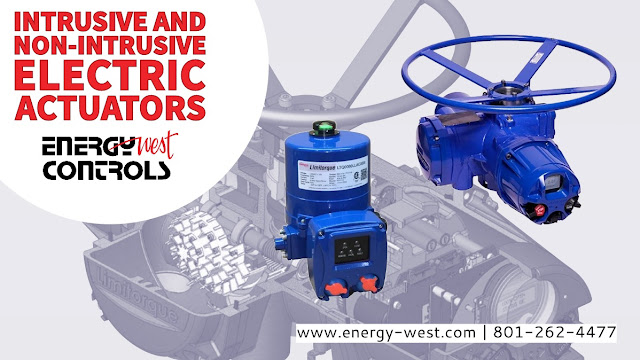
"Intrusive" and "Non-Intrusive" Industrial Electric Actuators

"Intrusive" and "Non-Intrusive" in Industrial Electric Actuators

Industrial electric actuators play a pivotal role in automating various industrial processes. These actuators convert electrical energy into mechanical motion to control or move machinery components such as valves and dampers. Regarding "intrusive" and "non-intrusive" in industrial electric actuators, the terms typically address the design and mode of operation, particularly the setup, monitoring, and control aspects. 

Here's a detailed breakdown of the differences:

Design & Configuration:

Intrusive Actuators: These actuators generally require users to open or intrude into the actuator casing or cover for setup, adjustment, or monitoring, meaning the internal components can be exposed to external environments, potentially compromising the actuator's integrity or operation.

Non-Intrusive Actuators: These actuators allow setup, adjustments, and monitoring without physically intruding or opening the actuator's casing, ensuring the internal components remain sealed and protected from external contaminants or potential damage.

Operation & Monitoring:

Intrusive Actuators: Adjustments or calibration typically require direct interaction with internal components, which can be time-consuming and may expose the system to errors or contamination.

Non-Intrusive Actuators: They often come with user interfaces, like LCD touchscreens or push buttons on the exterior, allowing operators to perform setup, calibration, or monitoring without exposing the internal components. Some might even have remote interfaces, facilitating monitoring and control from a distance.

Safety & Maintenance:

Intrusive Actuators: The need to open the actuator for adjustments or monitoring can introduce safety risks, mainly if the actuator is operating in environments with hazardous gases, liquids, or materials. Additionally, maintenance can be more challenging as exposing the internals might allow contaminants to compromise the system.

Non-Intrusive Actuators: These actuators provide a safer operation, especially in hazardous environments, as there's no need to open the casing. Their design also reduces maintenance challenges and improves the actuator's longevity.

Applications:

Intrusive Actuators: Might be used in applications where regular adjustments aren't required or in environments where exposure risks are minimal.

Non-Intrusive Actuators: Ideal for industries where the actuator's environment has contaminants or hazardous materials or where frequent adjustments or monitoring is essential without compromising safety.

Cost:

Intrusive Actuators: They might be less expensive initially because they have a more straightforward design without the external interface components. However, potential increased maintenance costs or reduced longevity might offset the initial savings.

Non-Intrusive Actuators: While they might have a higher initial cost due to their advanced design and user interfaces, they can result in savings in the long run due to reduced maintenance needs and extended operational life.

In summary, the primary distinction between intrusive and non-intrusive industrial electric actuators lies in their design and interaction mode. While intrusive actuators require direct access to internal components for setup and monitoring, non-intrusive variants enable these operations without opening the actuator casing and offering increased safety and operational advantages.

Energy-West Controls
801-262-4477


Detailed Instructions for Setting Position Limits on the Limitorque L120 Electric Actuator


This instructional video aims to safely illustrate how to set position limits on the Limitorque L120 electric actuator using the correct procedure. Explore the video to understand the right language for equipment, comprehend the wiring diagram about the limit switch contact development, and discover how to evaluate the limit switch's position.

The Flowserve Limitorque L120 electric actuator serves various environmental applications in the power, oil & gas, and water industries.

For more information, contact:
Energy West Controls
800-533-4477

SlurryFlo Control Valves for Abrasive and Erosive Slurries


Designed to solve severe flow control problems at the Canadian Oil Sands, the SlurryFlo control valve withstands some of the harshest process conditions, using patented technology that provides the ultimate wear resistance, performance, and durability.

Modulating the flow of slurry can be challenging. The continuous erosion often results in damaged valves and piping; and the costs associated with replacement valves, lost production and labor can be significant.

Compared to traditional ‘line of site’ slurry valves (ball valves, butterfly valves, and pinch valves), the SlurryFlo control valve delivers a quantum leap in service life and reduces the overall cost of ownership for your most demanding applications.

Because of the patented design, exposure to erosive flow only occurs to the trim components. Once they eventually wear out, these parts can easily be field replaced.

SlurryFlo control valves excel in abrasive applications throughout the mining industry or any other process where valve performance and life expectancy are critical.

Energy West Controls
800-533-4477

Industrial Electric Valve Actuators

Electric Actuators

An electric actuator is a device that uses electricity to open, close, or modulate a valve. While most of the fundamental concepts used in electric actuators have been around since the 1930s, decades of incremental advancement have significantly increased their capabilities while decreasing their cost. These developments have reached a tipping point in recent years, making electric actuators the preferable option for many applications. 

Electric valve actuation offer measurable benefits: 
  • Electricity is generally inexpensive, easy to handle, and readily accessible at most industrial facilities. 
  • Electric actuators often have a cheaper capital cost per equivalent torque/thrust output unit. 
  • They are also better for the environment and safer to use. 
  • Electric actuators may provide greater positioning precision for control or modulating valve duties and advanced process monitoring, data recording, and information feedback. 
  • Electric actuators include all necessary control functions, resulting in fewer capital costs. 
  • By providing distributed control, the electric actuator's historically high wire cost is reduced - through efficient and uncomplicated control logic wiring integrated into client SCADA or DCS systems. 
  • As torque and thrust needs grow, electric actuators weigh less and have smaller footprints than pneumatic actuators. 
  • Electronic actuators may provide very high output thrust and torque values when combined with external gears. 
There are also certain drawbacks to electric valve actuation to consider: 
  • With few exceptions, electric actuators cannot guarantee a fail-safe stroke. Nonetheless, they will "fail in place". Fail-safe stroke refers to an actuator's capacity to move a valve to a predetermined safe position when power is lost. 
  • Electric actuators are more complex than other types of actuators. Electronic technology also demands constant upgrading to keep up with component changes and advancements. 
  • Electric actuators are less cost-effective than pneumatic and hydraulic actuators and have operating speed limitations beyond a specified size/torque range. 
  • Electric actuators need more stringent certifications and design characteristics to be safe for use in hazardous areas where explosive process material may be present.
Energy West Controls will assist you in specifying and applying the best electric actuator for your process flow requirement. Visit https://energy-west.com or call 800-533-4477 to discuss your applications.