Showing posts with label Valve Automation. Show all posts

Smart Valves, 3D Printing, and Digital Twins: Revolutionizing Industrial Valve Automation

Smart Valves, 3D Printing, and Digital Twins: Revolutionizing Industrial Valve Automation

Three significant technological advances may revolutionize the future of industrial valves and valve automation in various markets. These advancements aim to improve efficiency, reliability, and sustainability in industries such as oil and gas, chemical processing, and water treatment.
  1. Smart Valves and Predictive Maintenance: Integrating smart sensors and artificial intelligence (AI) is one of industrial valves' most influential technological advances. Manufacturers equip smart valves with sensors that continuously monitor various parameters, such as pressure, temperature, and flow rate. AI algorithms analyze the data collected by these sensors, detecting anomalies and predicting potential valve failures before they occur. This predictive maintenance approach allows timely repairs and replacements, minimizes downtime, and increases system reliability. Industries such as oil and gas, where unplanned shutdowns can be extremely costly, are already adopting smart valve technology to optimize their operations and reduce maintenance costs.
  2. 3D Printing and Advanced Materials: 3D printing technology is transforming the manufacturing of industrial valves. With 3D printing, manufacturers can produce valve components quickly and cost-effectively, reducing lead times and inventory costs. Additionally, 3D printing enables the creation of complex valve geometries that were previously impossible to manufacture using traditional methods. This innovation allows for the development of valves with improved flow characteristics, reduced pressure drop, and enhanced performance. Furthermore, manufacturers increasingly use advanced materials, such as high-performance polymers and ceramic matrix composites, in valve manufacturing. These materials offer superior resistance to corrosion, high temperatures, and wear, making them ideal for demanding applications in the chemical processing and power generation industries.
  3. Digital Twin Technology and Virtual Commissioning: Digital twin technology is another game-changer in industrial valves and valve automation. Engineers create a digital twin, a virtual replica of a physical valve system, using real-time sensors and historical performance data. This technology allows for the simulation and optimization of valve performance under various operating conditions without physical testing. Using digital twins, engineers can identify potential issues, test different control strategies, and optimize valve settings for maximum efficiency. Virtual commissioning, which involves testing and validating control systems using digital twins, is becoming increasingly popular in the water treatment and pharmaceutical industries. This approach reduces the time and cost associated with physical commissioning and ensures that the valve system performs as expected from the outset.
Smart valves, 3D printing, advanced materials, digital twin technology, and virtual commissioning are leading the way in the bright future of industrial valves and valve automation. These technological advances will transform various markets, improving efficiency, reliability, and sustainability. As industries continue to embrace these innovations, we expect significant improvements in valve performance, reduced maintenance costs, and increased overall system reliability. Companies looking to stay competitive in an ever-evolving industrial landscape will find adopting these technologies crucial.


Energy West, Inc.
1955 West Industrial Circle
Salt Lake City, Utah 84104
Phone: 801-262-4477
Fax: 801-261-0862
Web: https://energy-west.com

2024 Industrial Valve Technology Predictions

2024 Industrial Valve Technology Predictions

The industrial valve automation sector tends to have gradual advancements focusing on efficiency, reliability, digital integration, and predictive maintenance rather than rapid, groundbreaking changes. It's safe to expect upgrades related to increased connectivity and IoT integration, further automation with AI and machine learning, more robust and adaptive control systems, enhanced material technologies for valves to improve durability and efficiency, and perhaps more significant emphasis on sustainability and energy efficiency within systems.

Here are some predictions for 2024:

  • The Rise of Intelligent Valves: 
Enhanced with IoT integration, valves will self-regulate and adjust to varying conditions, offering remote diagnostics and improved system efficiency.
  • 3D Printing for Tailored Valve Solutions: 
Precision and flexibility in valve manufacturing will be enhanced through 3D printing, allowing for custom designs and reduced production waste.
  • Transition to Non-metallic Valves: 
Ceramics, composites, and specialized polymers will increasingly replace metals, offering corrosion resistance and lightweight properties.
  • Revolutionary Sealing Mechanisms: 
Upgrades to sealing materials and mechanisms will improve valves' longevity, reliability, and maintenance.
  • Valves in Renewable Energy Systems: 
Specialized valves will become crucial in optimizing energy flows in renewable energy systems designed to withstand extreme conditions and support sustainable energy infrastructure.

Though traditionally slow to evolve, industrial valves stand to gain significantly from AI and advanced monitoring technologies. AI's predictive capabilities can forecast maintenance needs and optimize performance, reducing downtime and extending valve life. Meanwhile, monitoring technologies provide real-time data on valve conditions, allowing immediate adjustments to improve efficiency and safety. Together, these innovations promise a future where even the most steadfast industrial components, like valves, become part of a more innovative, responsive industrial ecosystem. 


Energy West Controls
https://energy-west.com
800-533-4477


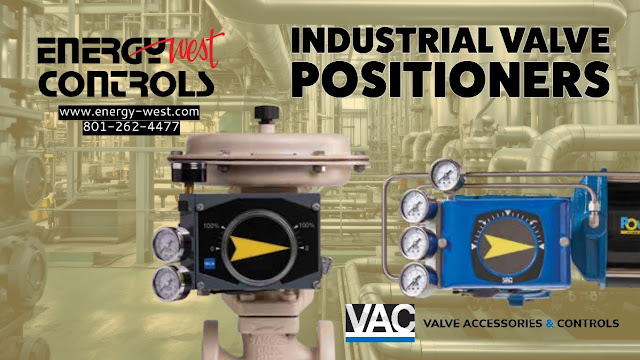
What are Valve Positioners?

What are Valve Positioners?

Valve positioners are critical components in industrial process control, ensuring accurate and efficient fluid flow control in various systems. Here's an overview of what they are and the role they play:

  • Definition: A valve positioner is a device used to control the positioning of a valve's actuator. It's an attachment to the valve actuator that ensures the valve reaches the correct position as the control system demands.
  • Types: There are several valve positioners, including pneumatic, electro-pneumatic, and digital or smart positioners. The choice depends on the specific requirements of the process and the operating environment.
  • Components: A typical valve positioner includes a feedback mechanism, a controller, and a means to actuate the valve. It receives a control signal (usually pneumatic or electrical) and manipulates the actuator to open or close the valve accordingly.

Role in Industrial Process Control

  • Accuracy and Precision: Valve positioners ensure that the valve accurately reaches the desired position as determined by the control signal, which is essential for maintaining precise control over process variables like flow rate, pressure, or temperature.
  • Compensating for Variabilities: They help compensate for external factors affecting valve operation, such as friction, pressure changes, or wear and tear, ensuring consistent performance over time.
  • Improved Control Dynamics: By providing faster and more accurate responses to control signals, positioners enhance the overall dynamics of the control loop to improve process stability and efficiency.
  • Facilitating Remote Control and Monitoring: Particularly with smart or digital positioners, they enable remote operation and monitoring of valves, integrating with modern control systems for better process management.
  • Energy Efficiency: By ensuring valves operate as needed and to the exact required extent, positioners can help reduce energy consumption.
  • Safety: In critical applications, they contribute to safety by ensuring valves respond correctly to emergency shut-down signals or other safety-related controls.

In summary, valve positioners are essential for enhancing industrial control systems' performance, efficiency, and reliability. They are vital in ensuring that the valves, the final control elements in many processes, operate as intended, thereby maintaining the desired control.

Valve Accessories and Controls (VAC) Positioners


Since its inception, VAC has consistently prioritized a customer-first approach in its business dealings. The company's range of quality positioner products features the straightforward V100, the adaptable V200, and the digital D400 and D500 models. These solidly built, designed positioners represent the beginning of the Valve Accessories and Controls narrative. VAC prides itself on a customer-oriented team dedicated to assisting you in selecting the ideal positioner for your needs, ensuring a hassle-free experience without the confusion of navigating through extensive phone directories and extensions. The combination of competitive pricing and exceptional service distinguishes VAC from its competitors.

Energy West Controls
https://energy-west.com
800-533-4477

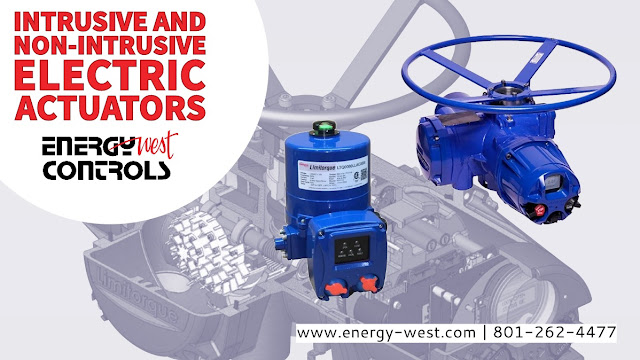
"Intrusive" and "Non-Intrusive" Industrial Electric Actuators

"Intrusive" and "Non-Intrusive" in Industrial Electric Actuators

Industrial electric actuators play a pivotal role in automating various industrial processes. These actuators convert electrical energy into mechanical motion to control or move machinery components such as valves and dampers. Regarding "intrusive" and "non-intrusive" in industrial electric actuators, the terms typically address the design and mode of operation, particularly the setup, monitoring, and control aspects. 

Here's a detailed breakdown of the differences:

Design & Configuration:

Intrusive Actuators: These actuators generally require users to open or intrude into the actuator casing or cover for setup, adjustment, or monitoring, meaning the internal components can be exposed to external environments, potentially compromising the actuator's integrity or operation.

Non-Intrusive Actuators: These actuators allow setup, adjustments, and monitoring without physically intruding or opening the actuator's casing, ensuring the internal components remain sealed and protected from external contaminants or potential damage.

Operation & Monitoring:

Intrusive Actuators: Adjustments or calibration typically require direct interaction with internal components, which can be time-consuming and may expose the system to errors or contamination.

Non-Intrusive Actuators: They often come with user interfaces, like LCD touchscreens or push buttons on the exterior, allowing operators to perform setup, calibration, or monitoring without exposing the internal components. Some might even have remote interfaces, facilitating monitoring and control from a distance.

Safety & Maintenance:

Intrusive Actuators: The need to open the actuator for adjustments or monitoring can introduce safety risks, mainly if the actuator is operating in environments with hazardous gases, liquids, or materials. Additionally, maintenance can be more challenging as exposing the internals might allow contaminants to compromise the system.

Non-Intrusive Actuators: These actuators provide a safer operation, especially in hazardous environments, as there's no need to open the casing. Their design also reduces maintenance challenges and improves the actuator's longevity.

Applications:

Intrusive Actuators: Might be used in applications where regular adjustments aren't required or in environments where exposure risks are minimal.

Non-Intrusive Actuators: Ideal for industries where the actuator's environment has contaminants or hazardous materials or where frequent adjustments or monitoring is essential without compromising safety.

Cost:

Intrusive Actuators: They might be less expensive initially because they have a more straightforward design without the external interface components. However, potential increased maintenance costs or reduced longevity might offset the initial savings.

Non-Intrusive Actuators: While they might have a higher initial cost due to their advanced design and user interfaces, they can result in savings in the long run due to reduced maintenance needs and extended operational life.

In summary, the primary distinction between intrusive and non-intrusive industrial electric actuators lies in their design and interaction mode. While intrusive actuators require direct access to internal components for setup and monitoring, non-intrusive variants enable these operations without opening the actuator casing and offering increased safety and operational advantages.

Energy-West Controls
801-262-4477


Valve Automation

Valve Automation Services

Valve automation refers to the use of electromechanical or pneumatic devices to control the opening and closing of valves in an industrial process. The goal of valve automation is to optimize the control of fluid flow in a system, which can involve adjusting the flow rate, pressure, temperature, or other process variables.

Valve automation can be used in a variety of industries, including chemical processing, oil and gas, water treatment, and power generation. There are many different types of valves that can be automated, including ball valves, butterfly valves, and gate valves, among others. These valves can be controlled manually or automatically using a variety of methods, including electrical signals, pneumatic signals, or hydraulic signals.

In an automated system, the valves are typically controlled by a central control system, which may be a programmable logic controller (PLC) or a distributed control system (DCS). The control system receives input from sensors in the process and sends output signals to the valve actuators to adjust the valve positions as needed. The control system may also include human-machine interfaces (HMIs) or other types of operator interfaces that allow the process to be monitored and controlled by a human operator.

Valve automation can provide a number of benefits in an industrial process, including improved safety, efficiency, and accuracy. By automating the control of valves, it is possible to optimize the flow of fluids in a system to meet the desired process conditions, which can help to reduce waste, save energy, and improve product quality. Additionally, automated valve control can help to prevent human error and improve the overall reliability of the process.

For more information, contact:


Energy West, Inc.
1955 West Industrial Circle
Salt Lake City, Utah 84104
Phone: 801-262-4477
Fax: 801-261-0862
Web: https://energy-west.com

Industrial Electric Valve Actuators

Electric Actuators

An electric actuator is a device that uses electricity to open, close, or modulate a valve. While most of the fundamental concepts used in electric actuators have been around since the 1930s, decades of incremental advancement have significantly increased their capabilities while decreasing their cost. These developments have reached a tipping point in recent years, making electric actuators the preferable option for many applications. 

Electric valve actuation offer measurable benefits: 
  • Electricity is generally inexpensive, easy to handle, and readily accessible at most industrial facilities. 
  • Electric actuators often have a cheaper capital cost per equivalent torque/thrust output unit. 
  • They are also better for the environment and safer to use. 
  • Electric actuators may provide greater positioning precision for control or modulating valve duties and advanced process monitoring, data recording, and information feedback. 
  • Electric actuators include all necessary control functions, resulting in fewer capital costs. 
  • By providing distributed control, the electric actuator's historically high wire cost is reduced - through efficient and uncomplicated control logic wiring integrated into client SCADA or DCS systems. 
  • As torque and thrust needs grow, electric actuators weigh less and have smaller footprints than pneumatic actuators. 
  • Electronic actuators may provide very high output thrust and torque values when combined with external gears. 
There are also certain drawbacks to electric valve actuation to consider: 
  • With few exceptions, electric actuators cannot guarantee a fail-safe stroke. Nonetheless, they will "fail in place". Fail-safe stroke refers to an actuator's capacity to move a valve to a predetermined safe position when power is lost. 
  • Electric actuators are more complex than other types of actuators. Electronic technology also demands constant upgrading to keep up with component changes and advancements. 
  • Electric actuators are less cost-effective than pneumatic and hydraulic actuators and have operating speed limitations beyond a specified size/torque range. 
  • Electric actuators need more stringent certifications and design characteristics to be safe for use in hazardous areas where explosive process material may be present.
Energy West Controls will assist you in specifying and applying the best electric actuator for your process flow requirement. Visit https://energy-west.com or call 800-533-4477 to discuss your applications.