Showing posts with label Industrial valves. Show all posts

Bridging Engineering and Industry: The Critical Role of Sales Engineers in Valves and Controls

The Critical Role of Sales Engineers

In industrial operations, where precision and uptime drive profitability, Sales Engineers play an essential yet often under-recognized role. Within the valves and controls industry, these professionals act as the crucial link between complex mechanical systems and the customers who depend on them. Their job demands both deep technical expertise and strong communication skills—the ability to understand a process problem and translate it into a practical, reliable solution.

Translating Complexity into Clarity

Sales Engineers don’t just sell valves; they solve problems. They work with plant engineers, maintenance supervisors, and procurement teams to evaluate process challenges and identify the right products for each application. One moment they might be presenting a valve automation package to a municipal water facility, and the next they’re troubleshooting steam control issues at a manufacturing plant.

They’re fluent in two languages—engineering and operations. When a facility manager explains a problem in terms of downtime or leakage, the Sales Engineer converts that into technical requirements: flow rate, pressure rating, material compatibility, and actuation type. They help customers see not just how a valve functions, but why it matters—how it will improve safety, efficiency, and long-term reliability.

From Specification to Solution

Every successful project starts with understanding the process. Sales Engineers begin by studying the application: What fluid or gas is being handled? What are the pressure and temperature extremes? How critical is flow control accuracy?

Armed with that knowledge, they specify the right valve type—whether a resilient-seated butterfly valve for chilled water, a globe valve for precise steam modulation, or a high-performance ball valve for corrosive chemicals. They consider the entire system, not just the component: the piping layout, the actuator interface, and the control feedback. Their goal is a solution that integrates seamlessly and performs as expected for years to come.

This systems-thinking mindset distinguishes great Sales Engineers. They know that choosing the wrong trim material or undersizing an actuator can lead to costly failures later. Their value lies in preventing those problems before they occur.

Support That Builds Trust

Unlike many sales roles, the Sales Engineer’s job doesn’t end with the purchase order. They often assist during installation and startup, ensuring the valve operates properly under real-world conditions. When issues arise—say a valve isn’t modulating correctly or a packing set needs replacement—they’re the first call for guidance.

Their follow-through turns them from vendors into trusted technical partners. By providing maintenance advice, recommending upgrades, and sharing best practices, they help customers extend equipment life and improve overall system performance. Over time, these relationships become the foundation of long-term customer loyalty.

Why It Matters

The right valve or control solution can determine whether a plant runs safely and efficiently—or faces downtime and expensive repairs. A skilled Sales Engineer helps avoid those risks. In a steam system, for example, an incorrectly specified valve can cause pressure surges or water hammer; the right one ensures smooth operation and energy savings.

Sales Engineers also contribute to broader goals like sustainability and compliance. By recommending low-emission packing designs, energy-efficient actuators, or smarter control technologies, they help facilities reduce waste and meet environmental standards.

The Mark of an Exceptional Sales Engineer

The best Sales Engineers share a few defining traits: curiosity, credibility, and commitment. They ask questions others overlook, study the details of each process, and stay involved long after installation. They know that their reputation depends not on selling the most products but on delivering the most dependable solutions.

The Bridge That Keeps Industry Flowing

Industrial systems depend on countless components working in harmony, and valves are among the most critical. Behind nearly every reliable process stands a Sales Engineer who made sure the right equipment was chosen, applied, and supported.

These professionals are the bridge between theory and practice, between precision engineering and practical performance. Their work keeps the world’s essential industries—power generation, water treatment, manufacturing, and more—running safely and efficiently.
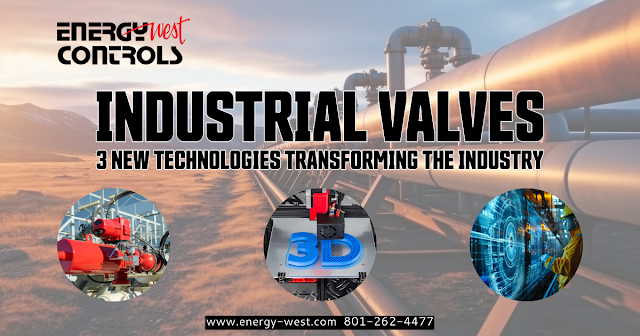
Smart Valves, 3D Printing, and Digital Twins: Revolutionizing Industrial Valve Automation

Smart Valves, 3D Printing, and Digital Twins: Revolutionizing Industrial Valve Automation

Three significant technological advances may revolutionize the future of industrial valves and valve automation in various markets. These advancements aim to improve efficiency, reliability, and sustainability in industries such as oil and gas, chemical processing, and water treatment.
  1. Smart Valves and Predictive Maintenance: Integrating smart sensors and artificial intelligence (AI) is one of industrial valves' most influential technological advances. Manufacturers equip smart valves with sensors that continuously monitor various parameters, such as pressure, temperature, and flow rate. AI algorithms analyze the data collected by these sensors, detecting anomalies and predicting potential valve failures before they occur. This predictive maintenance approach allows timely repairs and replacements, minimizes downtime, and increases system reliability. Industries such as oil and gas, where unplanned shutdowns can be extremely costly, are already adopting smart valve technology to optimize their operations and reduce maintenance costs.
  2. 3D Printing and Advanced Materials: 3D printing technology is transforming the manufacturing of industrial valves. With 3D printing, manufacturers can produce valve components quickly and cost-effectively, reducing lead times and inventory costs. Additionally, 3D printing enables the creation of complex valve geometries that were previously impossible to manufacture using traditional methods. This innovation allows for the development of valves with improved flow characteristics, reduced pressure drop, and enhanced performance. Furthermore, manufacturers increasingly use advanced materials, such as high-performance polymers and ceramic matrix composites, in valve manufacturing. These materials offer superior resistance to corrosion, high temperatures, and wear, making them ideal for demanding applications in the chemical processing and power generation industries.
  3. Digital Twin Technology and Virtual Commissioning: Digital twin technology is another game-changer in industrial valves and valve automation. Engineers create a digital twin, a virtual replica of a physical valve system, using real-time sensors and historical performance data. This technology allows for the simulation and optimization of valve performance under various operating conditions without physical testing. Using digital twins, engineers can identify potential issues, test different control strategies, and optimize valve settings for maximum efficiency. Virtual commissioning, which involves testing and validating control systems using digital twins, is becoming increasingly popular in the water treatment and pharmaceutical industries. This approach reduces the time and cost associated with physical commissioning and ensures that the valve system performs as expected from the outset.
Smart valves, 3D printing, advanced materials, digital twin technology, and virtual commissioning are leading the way in the bright future of industrial valves and valve automation. These technological advances will transform various markets, improving efficiency, reliability, and sustainability. As industries continue to embrace these innovations, we expect significant improvements in valve performance, reduced maintenance costs, and increased overall system reliability. Companies looking to stay competitive in an ever-evolving industrial landscape will find adopting these technologies crucial.


Energy West, Inc.
1955 West Industrial Circle
Salt Lake City, Utah 84104
Phone: 801-262-4477
Fax: 801-261-0862
Web: https://energy-west.com

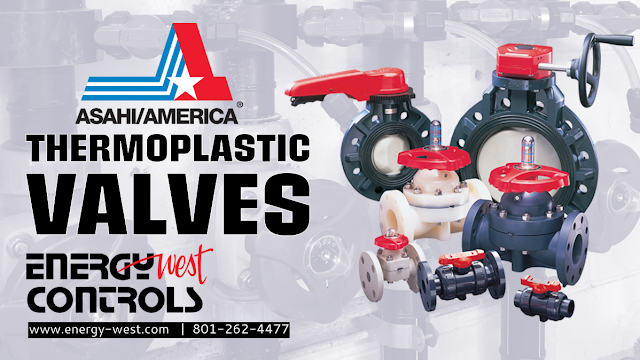
Thermoplastic Valves for Industry

Thermoplastic Valves for Industry

Thermoplastic valves, like those manufactured by Asahi America, play a crucial role in various industrial processes due to their unique properties and advantages. These valves, known for their durability, corrosion resistance, and versatility, are essential in industries where the control of fluids and gases is a critical component. The significance of thermoplastic valves stems from their ability to handle a wide range of chemicals without degradation, which is paramount in sectors like chemical processing, water and wastewater treatment, and semiconductor manufacturing. In the chemical processing industry, handling aggressive and corrosive substances is a routine task. Under such conditions, metal valves often succumb to corrosion, leading to frequent replacements and increased downtime. Thermoplastic valves, on the other hand, offer excellent resistance to a wide array of chemicals, ensuring a longer service life and reducing maintenance costs. This resistance also ensures the purity of processed chemicals, a critical factor in this industry. Asahi America's valves, for instance, are known for their reliability in these harsh environments, making them a preferred choice for many chemical processing plants.

The water and wastewater treatment industry also greatly benefits from using thermoplastic valves. These facilities deal with various chemicals used in the treatment process, such as chlorine and sulfuric acid. The corrosion-resistant nature of thermoplastic valves ensures that they can withstand these substances, maintaining their functionality over long periods. Furthermore, the lightweight nature of these valves, compared to traditional metal ones, allows for easier installation and handling, which is particularly beneficial in large-scale water treatment plants with numerous valves.

Another critical industry that relies heavily on thermoplastic valves is semiconductor manufacturing. This sector requires exceptionally high levels of purity and precision in handling various process gases and chemicals. Even the slightest contamination can lead to defects in semiconductor chips, resulting in significant financial losses. Thermoplastic valves offer the necessary chemical resistance and do not leach contaminants into the flow media, making them ideal for use in the ultra-clean environments required for semiconductor fabrication.

The pharmaceutical industry also finds thermoplastic valves indispensable. The production of pharmaceuticals often involves aggressive chemicals and the need for sterile conditions. Thermoplastic valves resist corrosion from these chemicals and are easy to clean and sterilize, maintaining the hygiene standards required in pharmaceutical manufacturing.

Thermoplastic valves, such as those produced by Asahi America, are essential in industries where chemical resistance, durability, and purity are paramount. Their role in chemical processing, water and wastewater treatment, semiconductor manufacturing, and pharmaceuticals highlights their versatility and critical role in maintaining the efficiency, safety, and reliability of industrial processes. The ongoing advancements in manufacturing these valves will continue to enhance their performance and expand their applications in various industries, underscoring their importance in the industrial world.

For more information about thermoplastic valves, contact     :

Energy West, Inc.
1955 West Industrial Circle
Salt Lake City, Utah 84104
Phone: 801-262-4477
Fax: 801-261-0862
Web: https://energy-west.com

2024 Industrial Valve Technology Predictions

2024 Industrial Valve Technology Predictions

The industrial valve automation sector tends to have gradual advancements focusing on efficiency, reliability, digital integration, and predictive maintenance rather than rapid, groundbreaking changes. It's safe to expect upgrades related to increased connectivity and IoT integration, further automation with AI and machine learning, more robust and adaptive control systems, enhanced material technologies for valves to improve durability and efficiency, and perhaps more significant emphasis on sustainability and energy efficiency within systems.

Here are some predictions for 2024:

  • The Rise of Intelligent Valves: 
Enhanced with IoT integration, valves will self-regulate and adjust to varying conditions, offering remote diagnostics and improved system efficiency.
  • 3D Printing for Tailored Valve Solutions: 
Precision and flexibility in valve manufacturing will be enhanced through 3D printing, allowing for custom designs and reduced production waste.
  • Transition to Non-metallic Valves: 
Ceramics, composites, and specialized polymers will increasingly replace metals, offering corrosion resistance and lightweight properties.
  • Revolutionary Sealing Mechanisms: 
Upgrades to sealing materials and mechanisms will improve valves' longevity, reliability, and maintenance.
  • Valves in Renewable Energy Systems: 
Specialized valves will become crucial in optimizing energy flows in renewable energy systems designed to withstand extreme conditions and support sustainable energy infrastructure.

Though traditionally slow to evolve, industrial valves stand to gain significantly from AI and advanced monitoring technologies. AI's predictive capabilities can forecast maintenance needs and optimize performance, reducing downtime and extending valve life. Meanwhile, monitoring technologies provide real-time data on valve conditions, allowing immediate adjustments to improve efficiency and safety. Together, these innovations promise a future where even the most steadfast industrial components, like valves, become part of a more innovative, responsive industrial ecosystem. 


Energy West Controls
https://energy-west.com
800-533-4477