Showing posts with label Rocky Mountain States. Show all posts

Mining Without Interruption: How Check Valves Keep Operations Running

Mining Without Interruption: How Check Valves Keep Operations Running

The mining industry demands unwavering equipment reliability to sustain productivity and meet the round-the-clock expectations of global supply chains. Among the key components in any mining system are valves—specifically check valves—which ensure fluid control in some of the harshest operating conditions on earth. Mining operations often unfold in remote locations, where systems face highly abrasive slurries, corrosive fluids, and extreme pressure variations. Without properly functioning check valves, the risk of equipment failure, safety hazards, and costly downtime increases significantly.

In mining, everything hinges on continuity. Interruptions to flow—whether of water, slurry, or chemical additives—can halt operations and trigger a cascade of logistical and financial problems. Check valves play a frontline role in ensuring that fluids move in the intended direction and that reverse flow does not threaten pump integrity, pipeline infrastructure, or overall plant performance. When reverse flow goes unchecked, it can lead to hydraulic shock, more commonly known as water hammer, which can fracture piping, damage pumps, and reduce the lifespan of critical components.

Mining processes are diverse, and the demands placed on valves vary widely depending on application. In autoclaving, check valves must endure intense pressure and high temperatures, often requiring Class V shut-off and high-alloy construction to withstand corrosive chemicals and thermal cycling. These valves must operate reliably in environments where failure could compromise safety and output.

Check valves serve a different but equally critical function in dewatering operations. Mining sites often sit below the water table, and dewatering systems—typically involving deep-well pumps—continuously remove groundwater to keep working areas dry and stable. These pumps operate at high capacities; any flow reversal could cause significant damage or inefficiency. A durable check valve positioned correctly in the discharge line mitigates this risk and protects against the destructive effects of the water hammer as the system cycles on and off.

Pump discharge is another crucial area where check valves prove their value. When pumps start or stop, the sudden change in flow direction can send a shockwave through the piping system. A fast-acting, properly rated check valve can absorb this impact and isolate the pump, extending its service life and reducing maintenance demands. In abrasive slurry handling, check valves must withstand a steady barrage of particles that can quickly erode or jam less rugged components. This requires thoughtful material selection—such as stainless steel, high-chrome iron, or rubber-lined designs—and precision engineering to maintain a tight seal under varying conditions.

Pipeline transport in mining adds another layer of complexity. Fluids often travel over long distances and across challenging terrain. In such systems, elevation changes introduce pressure fluctuations that increase the risk of flow reversal. Strategically placed check valves throughout the network regulate pressure and maintain system balance. Their ability to handle high flow rates, resist clogging, and endure vibration becomes essential in preventing surges and safeguarding against premature failure of pipes and joints.

Check valve performance ultimately depends on both product design and proper maintenance. Mining operations benefit greatly from regular inspection and service schedules that ensure valves open and close as intended. Operators often rely on swing check valves for their simplicity, but in some instances—particularly where quick closure is needed—spring-loaded or silent check valves offer better performance. Engineers must consider the chemical and physical environment and the dynamic flow conditions unique to each application.

In the high-stakes world of mining, downtime costs more than just production. It threatens safety, disrupts logistics, and strains capital investment. Check valves might not be the most visible component in the system, but their performance directly influences the reliability of the entire operation. Choosing the correct valve for the application—and maintaining it well—makes the difference between steady production and unexpected shutdown.

Energy West Controls, Inc.
1955 West Industrial Circle
Salt Lake City, Utah 84104
Phone: 801-262-4477
Fax: 801-261-0862
Web: https://energy-west.com

Precise Process Control through Segmented V Port Ball Valves

Segmented V Port Ball Valves

Control valves play a critical role in modern process control systems, and among the most versatile designs, the segmented V port control valve stands out for its precision and reliability. At its core, this valve features a spherical ball whose bore incorporates one or more machined "V" shaped segments. As the valve stem turns, the V port on the ball aligns progressively with the seat opening, allowing fluid to pass in a tightly controlled fashion. Unlike conventional round-port ball valves that yield an on-off behavior or crude throttling, segmented V port valves deliver smooth, predictable flow modulation that operators can trust in demanding process environments.

The secret behind the segmented V port valve lies in the geometry of its trim. The ball's V port resembles a slice of pie removed at a precise angle and depth. When the valve sits in the closed position, the solid regions of the ball bear against the seat, providing bubble-tight shutoff. As the stem rotates, the V edge first breaches the seat opening, introducing a small, accurate flow path. As rotation continues, the flow area expands in a near-linear or equal percentage fashion, depending on how the V segment and seat are profiled. With the V port engineered to match a desired flow characteristic, control systems achieve tighter loop performance with less hunting and overshoot.

Designers appreciate that segmented V port valves combine the ruggedness of quarter-turn ball technology with the fine control of globe valve trim. The principle of operation demands just a fraction of the torque required by globe valves, which rely on sliding action against a soft seat. Segmented ball valves open and close quickly, reducing actuator size and reaction time yet still delivering accurate control over a wide range of flow rates. Their turn-down ratios often exceed twenty to one, a figure that globe valves rarely match without custom trim.

Beyond flow characterization and turn-down, the segmented V port design offers several operational advantages. Maintenance crews find that the modular trim assemblies simplify field work: technicians swap out worn segments or seats without replacing the entire valve body. The design tolerates abrasive or corrosive media more readily than sliding-stem valves since the hardened V segment locks in place once the valve reaches the desired position. When fluid dynamics threaten cavitation or noise issues, the staged opening of the V port breaks up high-energy jets gradually, reducing erosion and sound levels without adding complex multi-stage bodies.

Process engineers also praise segmented V port valves' ability to provide on-off shutoff with minimal leakage. The tight metal-to-metal or resilient seat contact ensures regulatory compliance in safety-critical applications. The valves accumulate less stem packing wear because they do not rely on axial stem motion, and they resist dead-leg formation that can harbor contaminants in sanitary or food-grade lines. The overall result manifests in longer service intervals, higher availability, and lower total cost of ownership compared to globe or butterfly valves performing similar duties.

Industries that demand precise flow control in harsh conditions have adopted segmented V port valves. Operators use oil and gas production and refining for fuel gas throttling, flare control, and blending applications. Chemical and petrochemical plants harness the valves' accuracy for reagent dosing and loop tuning on exothermic reactions. Power generation utilities rely on their quick response to regulate feedwater, boiler steam, and cooling water systems. Pulp and paper mills integrate them into bleaching and liquor management lines where variable viscosities challenge conventional valves. Water treatment facilities, food and beverage processors, and pharmaceutical manufacturers also choose segmented V port technology for its clean operation and ease of validation.

When specifiers require robust, high-performance segmented control valves, A-T Controls of Cincinnati, OH, stands ready with its VS, VV, and VM Series. These industrial-grade valves deliver the features process professionals expect—precision, durability, and ease of maintenance—backed by A-T Controls' commitment to quality. For companies in the Rocky Mountain States, Energy West Controls distributes the complete line of VS/VV/VM Series segmented valves, ensuring local support and rapid delivery for complex flow control needs.

Energy West Controls, Inc.
1955 West Industrial Circle
Salt Lake City, Utah 84104
Phone: 801-262-4477
Fax: 801-261-0862
Web: https://energy-west.com

Around-the-Clock Steam Trap Insights Powered by SteamEye®

Keep Steam Trap Failures in Check with Real-Time SteamEye® Alerts

Armstrong International’s SteamEye® monitoring system addresses a critical need in steam-driven operations around the globe. Many facilities depend on steam to power essential processes, yet unnoticed leaks and inefficient steam traps can drive energy costs and jeopardize equipment reliability. SteamEye® brings intelligent detection and analytics to the forefront, helping plants boost uptime and reduce expenses. Its advanced ultrasonic technology stands out because it quickly senses trap failures and transmits real-time performance data to facility teams, who can then make prompt decisions that keep steam systems running at peak efficiency.

Traditional methods of manually inspecting traps often fall short. Personnel may struggle to reach every corner of a plant’s steam network, and workers only discover leaks after significant energy has already been wasted. SteamEye® replaces that reactive approach with round-the-clock surveillance. Each wireless monitor attaches directly to a steam trap and sends updates consistently. Staff receive immediate alerts when the system detects any deviation from normal flow, and they can respond before conditions worsen. This ongoing insight prevents minor issues from spiraling into catastrophic failures, which helps maintain operational stability and supports sustainability initiatives.

SteamEye® integrates seamlessly with existing systems because Armstrong International designed it with universal compatibility in mind. Users receive data through a secure gateway, and the simple interface offers an at-a-glance view of every trap in the network. This level of detail empowers teams to schedule maintenance proactively. Instead of waiting for scheduled checks or noticing a problem after the fact, workers can plan service when SteamEye® reveals anomalies, saving valuable time and resources.

Armstrong International built the SteamEye® product to support industrial plants, healthcare facilities, universities, and other large operations that rely on steam. As environmental regulations become more stringent, the industry demands technologies that eliminate waste and lower emissions. SteamEye® answers that call by minimizing steam loss and ensuring leaks do not persist. Many organizations see dramatic reductions in energy bills because the system flags losses the moment they occur. Improved efficiency also lowers a plant’s carbon footprint, which helps meet sustainability targets and aligns with growing industry expectations.

Engineers appreciate the reliability that comes with a robust monitoring platform. SteamEye’s battery-powered sensors perform accurately in harsh environments and continue gathering data in extreme temperatures. The network withstands electromagnetic interference and remains stable under heavy industrial usage. These design considerations reflect Armstrong International’s steam, air, and hot water systems expertise. In an era where digital transformation drives success, SteamEye delivers a comprehensive solution that unifies hardware, software, and connectivity.

Many factors set SteamEye® apart from competing products. Armstrong International’s reputation for engineering excellence contributes to the credibility of this monitoring system. Maintenance teams trust the real-time alerts, and stakeholders see tangible returns through lower operational costs and fewer unplanned outages. Technicians understand steam infrastructure better, translating into informed maintenance practices and extended equipment life.

SteamEye® shows the power of continuous data in modern industry. Armstrong International recognized a common pain point—undetected steam trap failures—and applied leading-edge technology to solve it. Facilities worldwide rely on these compact wireless monitors to maintain peak performance in their steam networks. The system’s flexibility, reliability, and precision position SteamEye as a key innovation in the marketplace. By catching inefficiencies before they escalate, Armstrong International’s SteamEye® product promotes safety, saves money, and sets a new standard for intelligent steam management in an evolving industrial landscape.

Energy West Controls, Inc.
1955 West Industrial Circle
Salt Lake City, Utah 84104
Phone: 801-262-4477
Fax: 801-261-0862
Web: https://energy-west.com

Energy West Controls: Bringing Delta T's Thermal Innovation to Mountain States Industry

Delta T Thermal Solutions

Based in Wichita, Texas, Delta T Thermal Solutions stands at the forefront of industrial heat transfer technology, providing innovative solutions for diverse industrial applications. The company's comprehensive product line of heat exchangers addresses complex thermal management challenges across multiple industries, from chemical processing to food production.

At the core of Delta T's offerings, the PLATECOIL® heat transfer system exemplifies the company's commitment to efficient thermal management. This versatile product line incorporates precision-engineered plates that maximize heat transfer while minimizing space requirements. Engineers particularly value PLATECOIL® units' ability to handle high-pressure applications while maintaining consistent temperature control across the entire surface area.

The company's ECONOCOIL® product line delivers cost-effective thermal solutions without compromising performance. These units integrate seamlessly into existing systems, offering substantial energy savings compared to traditional heat exchangers. Plant managers often choose ECONOCOIL® systems for their reliability and straightforward maintenance requirements, making them ideal for facilities seeking to optimize their operational costs.

Delta T's MAXCHANGER® series represents the pinnacle of compact heat exchanger design. These units deliver exceptional thermal performance in a fraction of the space required by conventional systems. The MAXCHANGER®'s innovative design enables rapid heat transfer while reducing installation footprint, making it particularly valuable in facilities with premium space.

In a strategic move to enhance its market presence in the Rocky Mountain region, Delta T Thermal Solutions partners with Energy West Controls. This collaboration brings Delta T's advanced thermal management solutions to a broader customer base through Energy West Controls' role as their authorized representative. The partnership combines Delta T's product expertise with Energy West Controls' deep understanding of regional industrial needs and requirements. This regional partnership strengthens Delta T's ability to provide responsive, localized customer support throughout the Rocky Mountain area. Energy West Controls' technical expertise and established regional relationships create a robust support network for implementing and maintaining Delta T's thermal solutions.

Energy West Controls, Inc.
1955 West Industrial Circle
Salt Lake City, Utah 84104
Phone: 801-262-4477
Fax: 801-261-0862
Web: https://energy-west.com

The Advantages of Thermoplastic Valves in Industrial and Laboratory Settings

The Advantages of Thermoplastic Valves in Industrial and Laboratory Settings

In industrial and laboratory environments, selecting the appropriate valve material ensures system integrity, safety, and efficiency. Thermoplastic valves—crafted from materials like PVC (Polyvinyl Chloride), CPVC (Chlorinated Polyvinyl Chloride), PP (Polypropylene), and PVDF (Polyvinylidene Fluoride)—have gained prominence due to their numerous advantages over traditional metal valves.

One of the most significant benefits of thermoplastic valves is their exceptional resistance to corrosion and chemical attack. Industries that handle aggressive chemicals, acids, bases, and solvents require materials that can withstand harsh conditions without degrading. Thermoplastics like PVC and CPVC exhibit remarkable chemical inertness, preventing reactions that could compromise the valve's integrity. This resistance not only prolongs the lifespan of the valves but also maintains the purity of the fluids being transported, which is essential in laboratory and pharmaceutical applications.

Thermoplastic valves also offer superior durability in environments where metal valves might fail. Unlike metals that can corrode or rust over time, thermoplastics remain unaffected by moisture and corrosive substances. This durability reduces the need for frequent maintenance and replacements, leading to cost savings and increased operational efficiency. Additionally, thermoplastic valves are less susceptible to scaling and fouling, ensuring consistent flow rates and reducing the risk of blockages.

Another advantage of thermoplastic valves is their lightweight nature. They are easier to handle and install than heavier metal valves, which can require specialized equipment and additional labor. This ease of installation translates to reduced installation time and costs. In complex piping systems, the reduced weight can lessen structural stress on pipelines and support structures, enhancing overall system stability.

Thermoplastics also provide excellent thermal and electrical insulation properties. Materials like PVDF and PP can operate effectively across a broad temperature range, making them suitable for hot and cold fluid applications. Their insulating properties help maintain fluid temperatures and prevent energy losses, which is particularly beneficial in processes where temperature control is critical.

In terms of versatility, thermoplastic valves are compatible with a wide range of applications. Chemical processing plants safely handle corrosive fluids without risk of contamination or degradation. Water and wastewater treatment facilities utilize thermoplastic valves to manage fluids that can harm metal components. In laboratory environments, the purity and inertness of thermoplastics are essential for precise and uncontaminated experimental results. The semiconductor industry relies on PVDF valves' ultra-high purity and low leachability to prevent contamination in sensitive manufacturing processes.

Cost-effectiveness is a compelling reason for the adoption of thermoplastic valves. While the initial investment may be comparable to metal valves, the long-term savings are significant due to reduced maintenance, longer service life, and minimized downtime. Businesses can allocate resources more efficiently, focusing on innovation and expansion rather than frequent equipment replacements.

Asahi America is a leader in providing high-quality thermoplastic valve solutions tailored to industrial and laboratory needs. With an extensive product lineup that includes PVC, CPVC, PP, and PVDF valves, Asahi America delivers reliable, efficient, and safe flow control solutions. Their valves are designed to meet rigorous industry standards, ensuring optimal performance even in the most demanding applications.

For businesses in the Rocky Mountain Region, accessing Asahi America's superior thermoplastic valves is convenient through Energy West Controls of Golden, CO. Energy West Controls offers expert guidance and support, helping clients select the most suitable valves for their specific applications. Their commitment to customer service and technical expertise ensures that clients receive top-quality products and the support necessary for seamless integration into their systems. To explore the full range of Asahi America's offerings, the Asahi America General Catalog can be downloaded from the Energy West Controls website here.

Thermoplastic valves provide unparalleled benefits in industrial and laboratory environments. Their resistance to corrosion and chemicals, durability, ease of installation, and cost-effectiveness make them an ideal choice for modern applications. By choosing Asahi America's thermoplastic valves and leveraging the regional availability and support from Energy West Controls, businesses can enhance their operations, ensure safety, and achieve long-term success in their respective industries.

Energy West Controls, Inc.
1955 West Industrial Circle
Salt Lake City, Utah 84104
Phone: 801-262-4477
Fax: 801-261-0862
Web: https://energy-west.com

Dezurik and Energy West Controls Partner to Enhance Industrial Solutions in The Rocky Mountain Region

Dezurik and Energy West Controls Partner to Enhance Industrial Solutions in The Rocky Mountain Region

Dezurik, a global leader in manufacturing high-quality valves, has formed a new partnership with Energy West Controls, a prominent manufacturer's representative company based in Golden, Colorado. This collaboration aims to strengthen services and support for customers across various industries in the Rocky Mountain region, including water treatment, sewage treatment, water distribution, pulp and paper, oil and gas downstream, petrochemical, mining, power, and hydropower dams.

With over a century of innovation and excellence, Dezurik has become synonymous with reliability and superior performance in critical industrial applications. Founded in the early 20th century, the company has consistently advanced engineering to develop valves that meet the rigorous demands of municipal and industrial processes. Its extensive product line—including butterfly, plug, and check valves—reflects Dezurik's commitment to quality and customer satisfaction across multiple sectors.

Energy West Controls brings a wealth of regional market knowledge and a team of seasoned professionals to the partnership. Specializing in process control and instrumentation, the company has represented top-tier manufacturers for several years. Its customer-centric approach and commitment to excellence align seamlessly with Dezurik's core values.

This partnership promises significant benefits for customers in the region. By leveraging Energy West Controls' strong local presence and Dezurik's extensive product portfolio, the collaboration will provide faster response times, improved technical support, and more accessible inventory. Customers can expect enhanced technical support from local experts who are readily available to provide on-site assistance, supported by Dezurik's engineering team.

A representative based in Golden, Colorado, means customers will have easier access to Dezurik's products and services. The partnership also enables the development of tailored solutions that meet the specific needs of regional clients, ensuring optimal performance and compliance with local regulations across diverse industries.

Looking ahead, Dezurik and Energy West Controls are poised to meaningfully impact the efficiency and reliability of processes in the region's key industries. Their combined expertise positions them to offer unparalleled service and innovative solutions to their customers.

--------

About Dezurik: Dezurik is a leading manufacturer of high-quality valves for industries including water treatment, sewage treatment, water distribution, pulp and paper, oil and gas downstream, and petrochemical, mining, power, and hydropower dams. With a history spanning over 100 years, the company is dedicated to providing innovative flow control solutions that set the standard for reliability and performance.

About Energy West Controls: Based in Golden, Colorado, Energy West Controls is a premier manufacturer's representative company specializing in process control and instrumentation. The company is committed to excellence and offers expert solutions and support to clients across various industries.

Energy West Controls, Inc.
1955 West Industrial Circle
Salt Lake City, Utah 84104
Phone: 801-262-4477
Fax: 801-261-0862
Web: https://energy-west.com

Industrial Butterfly Valves: Navigating the Differences Between Lug and Wafer Styles

Industrial Butterfly Valves: Navigating the Differences Between Lug and Wafer Styles

Understanding the differences between lug-style and wafer-style designs in industrial butterfly valves is essential for selecting the correct valve for specific applications. Butterfly valves, known for their compact design and efficiency in regulating flow, come in various types, each suited for different conditions and requirements. Among these, lug-style and wafer-style butterfly valves are two of the most common, each offering distinct advantages based on the application.

Lug-style butterfly valves are characterized by their threaded inserts or lugs, which allow them to be installed between flanges using bolts that connect directly to them. This design enables the valve to be removed from the system without disturbing the surrounding pipework, making it particularly advantageous in systems requiring frequent maintenance or where flow isolation is necessary. Lug-style valves can function as end-of-line valves and  can close against full pressure.

In contrast, wafer-style butterfly valves fit snugly between two flanges, with the flange bolts passing around the valve body. This design does not have threaded inserts, so the valve relies on the tension of the flange bolts to stay in place. Wafer-style valves are more compact and lightweight than their lug-style counterparts, making them an excellent choice for applications with limited space or weight. However, unlike lug-style valves, wafer-style valves do not provide the ability to isolate the downstream line if the valve needs to be removed, which can limit their use in specific systems.

When it comes to performance, both high-performance butterfly valves and resilient-seated butterfly valves offer unique benefits. High-performance butterfly valves, which can be found in both lug and wafer styles, are designed to handle higher pressures and temperatures, making them suitable for demanding applications in industries such as oil and gas, power generation, and petrochemicals. These valves typically feature a double-offset or triple-offset design, which reduces wear and extends the valve’s lifespan by minimizing contact between the disc and seat during operation.

Resilient seated butterfly valves, on the other hand, are more commonly used in applications where lower pressures and temperatures are present. These valves use a flexible rubber seat that provides a tight seal, ensuring reliable operation in systems such as water treatment, HVAC, and general industrial processes.

The choice between lug-style and wafer-style butterfly valves depends mainly on the application's specific requirements, including factors such as maintenance needs, space constraints, and pressure conditions. Both high-performance and resilient seated butterfly valves offer distinct advantages, with the former excelling in high-pressure environments and the latter providing reliable service in less demanding situations. Understanding these differences is critical to selecting the correct valve for any industrial system, and it is crucial for making informed decisions that will ensure the system's optimal performance. Always consult with a valve expert before applying any industrial valve in a service where you unsure of it's applicability.

Energy West, Inc.
1955 West Industrial Circle
Salt Lake City, Utah 84104
Phone: 801-262-4477
Fax: 801-261-0862
Web: https://energy-west.com

Industrial Mixing, Agitation, Blending, Heating, and Aeration: The Role of In-Line/In-Tank Eductors

Industrial Mixing, Agitation, Blending, Heating, and Aeration: The Role of In-Line/In-Tank Eductors

Industrial in-line/in-tank eductors are specialized devices that facilitate the mixing, agitation, blending, heating, and aeration of liquids within industrial tanks. These devices leverage fluid dynamics principles to create efficient processes without the need for mechanical agitators. Typically, an eductor comprises a nozzle, a throat, and a diffuser. The device operates on the Venturi principle, which utilizes the energy from a high-velocity fluid to entrain and mix a secondary fluid, enhancing the mixing process within the tank.

The operational mechanism of in-line/in-tank eductors begins with the primary fluid being pumped through the nozzle at high pressure. This primary fluid accelerates as it passes through the narrow throat of the eductor, creating a low-pressure zone. This low-pressure area draws the secondary fluid from the surrounding tank through the eductor's openings. As the secondary fluid enters, it mixes with the primary fluid in the throat, where the velocity remains high. The mixed fluids then move through the diffuser, where the velocity decreases, and the pressure recovers. This process thoroughly mixes the tank's contents, as the high-velocity jets of mixed fluids effectively agitate and blend the surrounding liquid.

In-line/in-tank eductors are employed in various industrial applications because they efficiently mix, heat, and aerate large volumes of liquid without moving parts, reducing maintenance requirements but also operational costs, making them a cost-effective solution. They are commonly used in the chemical, pharmaceutical, food and beverage, and wastewater treatment industries. For instance, in chemical processing, eductors ensure uniform mixing of reactants, thereby enhancing reaction rates and product consistency. In the pharmaceutical industry, they maintain homogeneous mixtures, which is crucial for product quality and efficacy. Food and beverage manufacturers use eductors to blend ingredients, ensure uniform flavor distribution, and maintain consistent product quality. Wastewater treatment facilities utilize eductors to keep solids in suspension, promote aerobic conditions, and enhance the overall efficiency of the treatment process.

In-line/in-tank eductors circulate heated fluid throughout the tank for heating applications, ensuring even temperature distribution. This is particularly useful in processes requiring precise temperature control, such as food processing and chemical reactions. The eductors help prevent hot spots and ensure the entire tank reaches the desired temperature uniformly. In aeration applications, eductors introduce air or gas into the liquid, promoting oxygen transfer and maintaining aerobic conditions for biological processes in wastewater treatment and fermentation.

The design of in-line/in-tank eductors offers several advantages, such as energy efficiency, reduced maintenance, and the ability to handle a wide range of viscosities and temperatures. Their compact size and straightforward installation process make them ideal for retrofitting existing systems without significant modifications. Furthermore, eductors are made from various materials, including stainless steel, polypropylene, and PVDF, to accommodate different chemical compatibilities and operating conditions. Engineers consider factors such as tank size, fluid properties, desired mixing patterns, and required turnover rates when selecting an in-tank eductor. Proper sizing and placement of eductors within the tank are crucial for achieving optimal performance. Multiple eductors may be installed in larger tanks to ensure comprehensive mixing throughout the volume.

Jacoby-Tarbox, a division of Clark-Reliance Corporation, has established itself as a leading manufacturer of high-quality In-line/in-tank educators. Their products are renowned for their robust construction, precision engineering, and superior mixing performance. Jacoby-Tarbox offers a variety of in-tank eductor designs for multiple applications, from small process vessels to massive storage tanks. Their eductors feature optimized nozzle and diffuser geometries that maximize efficiency and minimize pressure loss. Jacoby-Tarbox's expertise in fluid dynamics and mixing technology has made their in-line/in-tank eductors a preferred choice for industries seeking reliable and efficient mixing, heating, and aeration solutions.

Energy West, Inc.
1955 West Industrial Circle
Salt Lake City, Utah 84104
Phone: 801-262-4477
Fax: 801-261-0862
Web: https://energy-west.com

Steam Trap Management: An Essential Component of Your Decarbonization Strategy

Steam Trap Management

As we approach the midpoint in 2024, the urgency of decarbonization efforts becomes increasingly clear. Nations and industries are uniting in a global effort to reduce their carbon footprint and combat climate change. Decarbonization, the process of reducing carbon dioxide (CO2) emissions across sectors like energy production, transportation, and industrial processes, is at the forefront of this movement. Governments and companies are investing in renewable energy sources, energy efficiency measures, and carbon capture technologies to lessen their reliance on fossil fuels. While progress has been made, with many countries setting ambitious net-zero emissions targets, the journey to meet the goals of the Paris Agreement and limit global warming to well below 2°C above pre-industrial levels is far from over. The transition to a low-carbon economy is a reality, but it demands ongoing commitment, innovation, and collaboration from all stakeholders to accelerate the pace of change and mitigate the most severe impacts of climate change.

Developing a roadmap to decarbonization tailored to your specific facilities and industry is crucial for several reasons:


1. Unique challenges and opportunities: Each industry and facility has unique challenges and opportunities for reducing carbon emissions. A tailored roadmap considers your operations' specific processes, equipment, and energy requirements, allowing for more targeted and practical solutions.

2. Cost-effectiveness: By creating a customized plan, we ensure that your investment in emissions reduction is maximized. This is particularly important as the transition to a low-carbon economy can be expensive. Our tailored approach prioritizes the most cost-effective strategies for your facility, providing you with the assurance that you are getting the most out of your investment.

3. Compliance with regulations: As governments around the world implement more stringent emissions regulations, a tailored decarbonization roadmap helps ensure that your facility remains compliant, avoiding potential fines and reputational damage.

4. Stakeholder engagement: Developing a specific plan for your facility is about meeting regulations and engaging your stakeholders. By demonstrating your commitment to sustainability and environmental responsibility, you empower your employees, reassure your investors, and attract environmentally conscious customers. This is a powerful way to build trust and strengthen your relationships with your stakeholders.

Steam trap management is a critical step in developing a decarbonization roadmap for several reasons:


1. Energy efficiency: Steam traps are essential for maintaining energy efficiency in steam systems. Malfunctioning steam traps can lead to significant energy losses, increased fuel consumption, and higher carbon emissions. Facilities can reduce their energy waste and improve overall system efficiency by properly managing and maintaining steam traps.

2. Cost savings: Efficient steam trap management can lead to substantial cost savings by reducing energy consumption and minimizing the need for costly repairs or replacements of damaged equipment.

3. System performance: Steam traps are crucial in removing condensate, air, and non-condensable gases from the steam system. Failure to effectively manage steam traps can lead to decreased system performance, reduced heat transfer efficiency, and potential damage to equipment.

4. Safety and reliability: Properly functioning steam traps are essential for maintaining a safe and reliable steam system. Malfunctioning traps can cause water hammer, leading to equipment damage and potential safety hazards for personnel.

By incorporating steam trap management into your decarbonization roadmap, you can identify opportunities for improved energy efficiency, cost savings, and reduced carbon emissions. This step contributes to a more comprehensive and effective strategy for achieving your facility's sustainability goals.

Energy West, Inc.
1955 West Industrial Circle
Salt Lake City, Utah 84104
Phone: 801-262-4477
Fax: 801-261-0862
Web: https://energy-west.com


Unlocking Success: The Crucial Role of Sales Engineers in Industrial Instrumentation and Valve Selection

Crucial Role of Sales Engineers in Industrial Instrumentation and Valve Selection

Industrial process control instrumentation and valves are pivotal in maintaining the smooth operation, efficiency, and safety of various manufacturing processes. In this context, the role of experienced industrial Sales Engineers is unique and indispensable. Their involvement in specifying, selecting, and applying these critical components can bring numerous benefits and streamline the entire process.

First and foremost, Sales Engineers possess in-depth knowledge of the latest technologies, product offerings, and industry best practices. They undergo extensive training and gain hands-on experience with various industrial instrumentation and valve solutions. This expertise allows them to provide valuable insights and recommendations tailored to specific application requirements. By leveraging their knowledge, engineers and project managers can make informed decisions, ensuring the selection of the most suitable and cost-effective components for their projects.

Furthermore, Sales Engineers are not just intermediaries between the customer and the manufacturer. They take a proactive approach in understanding the customer's needs, challenges, and objectives, and then translate them into actionable solutions. This close collaboration allows Sales Engineers to guide customers through the complex landscape of industrial instrumentation and valves, offering advice on product specifications, compatibility, and integration with existing systems. This consultative approach empowers customers to optimize their processes, enhance efficiency, and achieve their desired outcomes.

In addition to their technical expertise, Sales Engineers provide valuable support throughout the project lifecycle. They assist in the initial design and specification phase, offering recommendations on instrument and valve sizing, construction materials, and performance characteristics. As the project progresses, Sales Engineers remain actively involved, providing technical support, troubleshooting assistance, and seamless integration with other system components. Their commitment to customer success extends beyond the initial sale, as they often provide ongoing support and after-sales service.

Another significant advantage of working with Sales Engineers is their ability to facilitate effective communication and coordination among various stakeholders. Industrial projects often involve multiple departments, contractors, and suppliers, each with priorities and requirements. Sales Engineers act as a central point of contact, fostering collaboration and ensuring all parties align towards a common goal. They help bridge the gap between technical and non-technical stakeholders, translating complex concepts into easily understandable terms and facilitating productive discussions.

Furthermore, Sales Engineers keep abreast of the latest industry standards, regulations, and compliance requirements. They can guide the selection of instrumentation and valves that meet stringent safety, environmental, and performance standards. Engineers can avoid costly rework, delays, and potential legal issues by ensuring compliance from the outset. Sales Engineers' expertise in navigating regulatory landscapes helps mitigate risks and ensures that projects adhere to the necessary standards and best practices.

Lastly, the partnership with Sales Engineers is not just a one-time transaction. It can lead to long-term benefits and strategic alliances. As trusted advisors, Sales Engineers develop a deep understanding of their customers' businesses, processes, and future goals. This in-depth knowledge enables them to proactively identify opportunities for improvement, propose innovative solutions, and align their offerings with the customer's evolving needs. By fostering strong relationships built on trust and mutual success, Sales Engineers become valuable assets, contributing to the overall growth and competitiveness of their customers' operations.

Working with industrial Sales Engineers when specifying, selecting, and applying industrial process control instrumentation and industrial valves is highly beneficial and essential. Their technical expertise, industry knowledge, and commitment to customer success make them invaluable partners in optimizing processes, improving efficiency, and achieving project objectives. By leveraging the skills and support of Sales Engineers, engineers and project managers can confidently navigate the complexities of industrial instrumentation and valves, ultimately driving the success of their projects and organizations.

Energy West, Inc.
1955 West Industrial Circle
Salt Lake City, Utah 84104
Phone: 801-262-4477
Fax: 801-261-0862
Web: https://energy-west.com

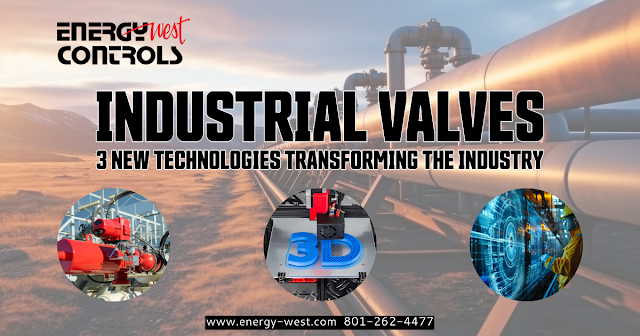
Smart Valves, 3D Printing, and Digital Twins: Revolutionizing Industrial Valve Automation

Smart Valves, 3D Printing, and Digital Twins: Revolutionizing Industrial Valve Automation

Three significant technological advances may revolutionize the future of industrial valves and valve automation in various markets. These advancements aim to improve efficiency, reliability, and sustainability in industries such as oil and gas, chemical processing, and water treatment.
  1. Smart Valves and Predictive Maintenance: Integrating smart sensors and artificial intelligence (AI) is one of industrial valves' most influential technological advances. Manufacturers equip smart valves with sensors that continuously monitor various parameters, such as pressure, temperature, and flow rate. AI algorithms analyze the data collected by these sensors, detecting anomalies and predicting potential valve failures before they occur. This predictive maintenance approach allows timely repairs and replacements, minimizes downtime, and increases system reliability. Industries such as oil and gas, where unplanned shutdowns can be extremely costly, are already adopting smart valve technology to optimize their operations and reduce maintenance costs.
  2. 3D Printing and Advanced Materials: 3D printing technology is transforming the manufacturing of industrial valves. With 3D printing, manufacturers can produce valve components quickly and cost-effectively, reducing lead times and inventory costs. Additionally, 3D printing enables the creation of complex valve geometries that were previously impossible to manufacture using traditional methods. This innovation allows for the development of valves with improved flow characteristics, reduced pressure drop, and enhanced performance. Furthermore, manufacturers increasingly use advanced materials, such as high-performance polymers and ceramic matrix composites, in valve manufacturing. These materials offer superior resistance to corrosion, high temperatures, and wear, making them ideal for demanding applications in the chemical processing and power generation industries.
  3. Digital Twin Technology and Virtual Commissioning: Digital twin technology is another game-changer in industrial valves and valve automation. Engineers create a digital twin, a virtual replica of a physical valve system, using real-time sensors and historical performance data. This technology allows for the simulation and optimization of valve performance under various operating conditions without physical testing. Using digital twins, engineers can identify potential issues, test different control strategies, and optimize valve settings for maximum efficiency. Virtual commissioning, which involves testing and validating control systems using digital twins, is becoming increasingly popular in the water treatment and pharmaceutical industries. This approach reduces the time and cost associated with physical commissioning and ensures that the valve system performs as expected from the outset.
Smart valves, 3D printing, advanced materials, digital twin technology, and virtual commissioning are leading the way in the bright future of industrial valves and valve automation. These technological advances will transform various markets, improving efficiency, reliability, and sustainability. As industries continue to embrace these innovations, we expect significant improvements in valve performance, reduced maintenance costs, and increased overall system reliability. Companies looking to stay competitive in an ever-evolving industrial landscape will find adopting these technologies crucial.


Energy West, Inc.
1955 West Industrial Circle
Salt Lake City, Utah 84104
Phone: 801-262-4477
Fax: 801-261-0862
Web: https://energy-west.com

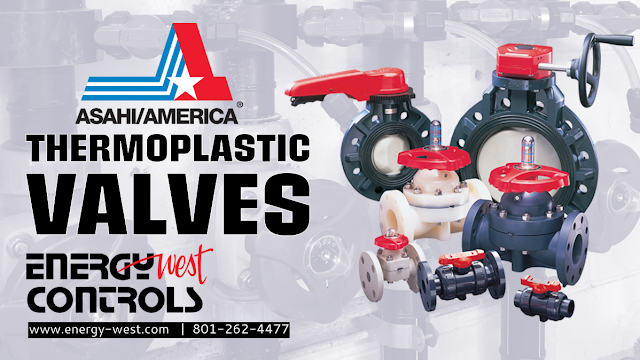
Thermoplastic Valves for Industry

Thermoplastic Valves for Industry

Thermoplastic valves, like those manufactured by Asahi America, play a crucial role in various industrial processes due to their unique properties and advantages. These valves, known for their durability, corrosion resistance, and versatility, are essential in industries where the control of fluids and gases is a critical component. The significance of thermoplastic valves stems from their ability to handle a wide range of chemicals without degradation, which is paramount in sectors like chemical processing, water and wastewater treatment, and semiconductor manufacturing. In the chemical processing industry, handling aggressive and corrosive substances is a routine task. Under such conditions, metal valves often succumb to corrosion, leading to frequent replacements and increased downtime. Thermoplastic valves, on the other hand, offer excellent resistance to a wide array of chemicals, ensuring a longer service life and reducing maintenance costs. This resistance also ensures the purity of processed chemicals, a critical factor in this industry. Asahi America's valves, for instance, are known for their reliability in these harsh environments, making them a preferred choice for many chemical processing plants.

The water and wastewater treatment industry also greatly benefits from using thermoplastic valves. These facilities deal with various chemicals used in the treatment process, such as chlorine and sulfuric acid. The corrosion-resistant nature of thermoplastic valves ensures that they can withstand these substances, maintaining their functionality over long periods. Furthermore, the lightweight nature of these valves, compared to traditional metal ones, allows for easier installation and handling, which is particularly beneficial in large-scale water treatment plants with numerous valves.

Another critical industry that relies heavily on thermoplastic valves is semiconductor manufacturing. This sector requires exceptionally high levels of purity and precision in handling various process gases and chemicals. Even the slightest contamination can lead to defects in semiconductor chips, resulting in significant financial losses. Thermoplastic valves offer the necessary chemical resistance and do not leach contaminants into the flow media, making them ideal for use in the ultra-clean environments required for semiconductor fabrication.

The pharmaceutical industry also finds thermoplastic valves indispensable. The production of pharmaceuticals often involves aggressive chemicals and the need for sterile conditions. Thermoplastic valves resist corrosion from these chemicals and are easy to clean and sterilize, maintaining the hygiene standards required in pharmaceutical manufacturing.

Thermoplastic valves, such as those produced by Asahi America, are essential in industries where chemical resistance, durability, and purity are paramount. Their role in chemical processing, water and wastewater treatment, semiconductor manufacturing, and pharmaceuticals highlights their versatility and critical role in maintaining the efficiency, safety, and reliability of industrial processes. The ongoing advancements in manufacturing these valves will continue to enhance their performance and expand their applications in various industries, underscoring their importance in the industrial world.

For more information about thermoplastic valves, contact     :

Energy West, Inc.
1955 West Industrial Circle
Salt Lake City, Utah 84104
Phone: 801-262-4477
Fax: 801-261-0862
Web: https://energy-west.com

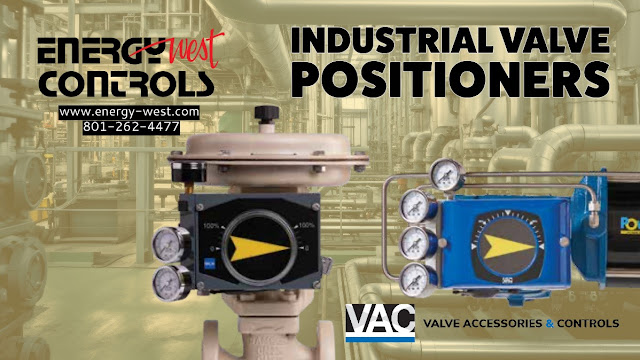
What are Valve Positioners?

What are Valve Positioners?

Valve positioners are critical components in industrial process control, ensuring accurate and efficient fluid flow control in various systems. Here's an overview of what they are and the role they play:

  • Definition: A valve positioner is a device used to control the positioning of a valve's actuator. It's an attachment to the valve actuator that ensures the valve reaches the correct position as the control system demands.
  • Types: There are several valve positioners, including pneumatic, electro-pneumatic, and digital or smart positioners. The choice depends on the specific requirements of the process and the operating environment.
  • Components: A typical valve positioner includes a feedback mechanism, a controller, and a means to actuate the valve. It receives a control signal (usually pneumatic or electrical) and manipulates the actuator to open or close the valve accordingly.

Role in Industrial Process Control

  • Accuracy and Precision: Valve positioners ensure that the valve accurately reaches the desired position as determined by the control signal, which is essential for maintaining precise control over process variables like flow rate, pressure, or temperature.
  • Compensating for Variabilities: They help compensate for external factors affecting valve operation, such as friction, pressure changes, or wear and tear, ensuring consistent performance over time.
  • Improved Control Dynamics: By providing faster and more accurate responses to control signals, positioners enhance the overall dynamics of the control loop to improve process stability and efficiency.
  • Facilitating Remote Control and Monitoring: Particularly with smart or digital positioners, they enable remote operation and monitoring of valves, integrating with modern control systems for better process management.
  • Energy Efficiency: By ensuring valves operate as needed and to the exact required extent, positioners can help reduce energy consumption.
  • Safety: In critical applications, they contribute to safety by ensuring valves respond correctly to emergency shut-down signals or other safety-related controls.

In summary, valve positioners are essential for enhancing industrial control systems' performance, efficiency, and reliability. They are vital in ensuring that the valves, the final control elements in many processes, operate as intended, thereby maintaining the desired control.

Valve Accessories and Controls (VAC) Positioners


Since its inception, VAC has consistently prioritized a customer-first approach in its business dealings. The company's range of quality positioner products features the straightforward V100, the adaptable V200, and the digital D400 and D500 models. These solidly built, designed positioners represent the beginning of the Valve Accessories and Controls narrative. VAC prides itself on a customer-oriented team dedicated to assisting you in selecting the ideal positioner for your needs, ensuring a hassle-free experience without the confusion of navigating through extensive phone directories and extensions. The combination of competitive pricing and exceptional service distinguishes VAC from its competitors.

Energy West Controls
https://energy-west.com
800-533-4477

Navigating Industrial Steam Traps: The Value of Expert Surveying

Navigating Industrial Steam Traps: The Value of Expert Surveying

Steam systems are integral to the operations of various industries, from power generation to petrochemicals, pharmaceuticals, mining, oil & gas, and pulp and paper mills. A critical component of steam systems is the steam trap—a device designed to remove condensate, air, and other non-condensable gases from the steam system without letting steam escape. Like every mechanical system, steam traps require regular monitoring to ensure they function optimally, which is where steam trap surveys come into play.

What are Steam Trap Surveys?


A steam trap survey systematically inspects and tests all steam traps in a facility to assess their condition and performance. These surveys involve:

  1. Identification: Each trap is located and tagged to keep track of its status.
  2. Testing: Various techniques, such as ultrasound, temperature measurement, and visual inspection, are used to determine if the steam trap is working correctly.
  3. Documentation: Data on the functioning status (e.g., failed open, failed closed, working correctly) and other relevant information about each trap are documented for analysis and future reference.
  4. Analysis & Recommendations: After the survey, the data is analyzed to determine the overall health of the steam system, and recommendations are made for repairs or replacements.

Why are Steam Trap Surveys Important?


Energy Conservation: A malfunctioning steam trap can allow steam to escape, leading to energy wastage. Ensuring all steam traps work efficiently helps conserve energy and reduces operating costs.
  1. Increased System Efficiency: A failed steam trap can cause water hammer, reduced heat transfer efficiency, and other issues that can negatively impact system performance.
  2. Safety: Steam system malfunctions can pose safety risks. Regularly checking steam traps helps identify and rectify potential hazards before they escalate.
  3. Prolonged Equipment Life: Regular maintenance, including issues found in steam trap surveys, can extend the life of the equipment, reducing long-term capital expenditure.
  4. Environmental Impact: With the global emphasis on reducing carbon footprints, energy-efficient operations, including efficient steam systems, contribute to lowered greenhouse gas emissions.

The Importance of Hiring Experienced Contractors


While understanding the need for steam trap surveys is crucial, it's equally important to recognize the value of expertise in conducting these assessments.Thorough Inspection: Experienced contractors know how to navigate complex industrial settings and ensure no trap is overlooked during the survey.
  1. Accuracy: With expertise comes precision. Professionals use advanced techniques and equipment to gauge steam trap functionality accurately.
  2. Tailored Recommendations: Experienced surveyors can provide tailored solutions based on the unique needs of a plant, leading to optimal system performance.
  3. Cost Savings: Although there's an upfront cost associated with hiring experts, the long-term savings due to enhanced system efficiency, reduced energy wastage, and decreased equipment replacement costs make it a worthy investment.
  4. Peace of Mind: Knowing that seasoned professionals are handling the health of your steam system gives peace of mind that every detail will be addressed.
Conclusion

Industrial steam trap surveys are essential to maintaining a steam system's efficiency, safety, and longevity. They lead to energy conservation and cost savings and play a vital role in ensuring smooth operations. Hiring an experienced contractor to undertake this task ensures that the survey has the highest expertise and precision, setting the foundation for an efficient and safe steam system.

Energy West Controls
https://energy-west.com
800-533-4477

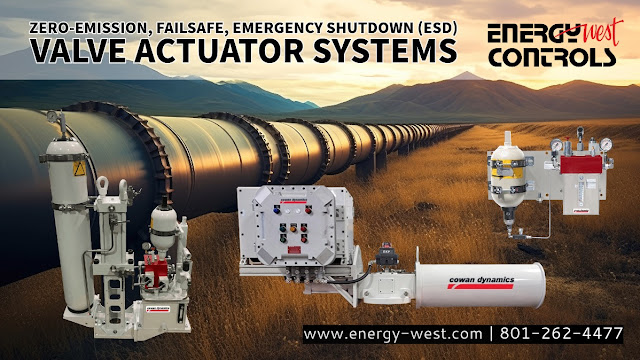
Zero-Emission, Failsafe, Emergency Shutdown (ESD) Valve Actuator Systems

Zero-Emission, Failsafe, Emergency Shutdown (ESD) Valve Actuator Systems

The oil and gas industry has evolved significantly, with a heightened focus on environmental protection and safety. An essential component to safely transferring oil and gas via pipeline is the zero-emission, failsafe emergency shutdown (ESD) valve actuator.

ESD valve actuator systems halt the flow of hazardous fluids or gases when abnormal operating conditions arise. This quick intervention is essential to prevent catastrophic failures, leaks, and explosions. Two main features define these systems: their "zero emission" capacity and "failsafe" functionality. The former ensures the actuator does not contribute harmful emissions to the environment, and the latter ensures that the system automatically reverts to a safe mode in case of a malfunction.

These systems incorporate a sealed design that prevents the escape of hazardous gases to achieve the zero-emissions objective. This design includes high-quality seals and components that leave no room for weak points where emissions might potentially escape. Additionally, many of the latest actuators have monitoring systems looking for possible leaks or system failures. The system can alarm or begin the necessary shutdown procedures if such an issue arises.

Failsafe mechanisms are critically important. A spring return mechanism is one of the primary ways this is achieved. Suppose there's a power loss or a system malfunction. In that case, the spring propels the valve to its designated safe position, which could be either fully open or fully closed, based on the specific application. Additionally, some actuators are designed with secondary power sources, like batteries or reserves of compressed gas, ensuring they remain operational even when the primary power source is compromised. These actuators can promptly recognize operational irregularities and anomalies when coupled with intelligent control systems. Once detected, the system, adhering to predefined parameters, can call on whether to shut down the valve, sound alarms, or take other necessary protective measures.

For several reasons, the introduction and widespread adoption of these advanced ESD valve actuator systems are crucial for pipeline distribution networks. Environmentally, they help mitigate leaks in midstream pipelines, which, if unchecked, could lead to substantial ecological damage, especially if hazardous gases or liquids find their way into the ground or water sources. Another environmental benefit is in the fight against climate change. Methane, frequently found in natural gas, is a potent greenhouse gas. By guaranteeing zero emissions, these actuators significantly reduce the release of methane into our atmosphere.

From a safety perspective, the fast-acting nature of ESD actuators ensures that the flow of potentially flammable substances can be quickly shut down, minimizing the risk of fires or explosions. 

Furthermore, with tightening regulations across numerous jurisdictions regarding emissions and safety standards in the oil and gas sector, these zero-emission, failsafe ESD valve actuators have become the gold standard, assisting companies in complying with the stringent rules, not only preventing significant financial penalties but also circumvents potential operational halts.

As the oil and gas industry marches forward, addressing ever-present environmental and safety challenges, the zero-emission failsafe ESD valve actuator systems protect the environment and pipeline operators from the consequences of failures, ensuring public and environmental security and demonstrating a commitment to responsible and sustainable operations.

For more information, contact:

Energy West, Inc.
1955 West Industrial Circle
Salt Lake City, Utah 84104
Phone: 801-262-4477
Fax: 801-261-0862
Web: https://energy-west.com

Capitalizing on Hidden Assets: The Significant Energy Potential in Waste Heat with Armstrong International Circular Thermal℠


The first law of thermodynamics states that energy is neither created nor destroyed, maintaining a constant quantity in a system. When energy is utilized, often through conversion, it degrades into a lower quality form. This begs the question: how does degraded yet undestroyed energy exit an industrial plant?

Waste heat, while being of lower quality, retains a significant quantity of energy. Studies indicate that 50 to 80% of primary energy used in light industries becomes waste heat at medium or low temperatures when leaving the plant. Thus, up to 80% of this energy is recyclable.

By incorporating Armstrong International's  Circular Thermal℠ model into industrial processes, we can recapture and reuse this waste energy.

For more information about Armstrong International products, and their Circular Thermal℠ technology, contact Energy West Controls. Call 800-533-4477 or visit https://energy-west.com.

The Role of Boiler Drum Level Instrumentation and Controls

The Role of Boiler Drum Level Instrumentation and Controls

Boiler drum level instrumentation and controls play a crucial role in the power generation and process control industries, ensuring steam-generating boilers' safe and efficient operation. These instruments and controls primarily manage the water level within the boiler drum, maintaining it within a specific range to ensure the boiler operates effectively and safely. Their critical functions break down as follows:


  1. Safety: A boiler's primary objective is to produce steam, which requires a precise water and heat balance. If the water level in the boiler drum is too low, the boiler tubes could overheat and cause a failure or even a catastrophic explosion. Conversely, suppose the water level is too high. In that case, excessive water may be carried over into the steam system, causing damage to downstream equipment and reducing the overall efficiency of the power generation process.
  2. Efficiency: Maintaining the optimal water level in the boiler drum ensures efficient heat transfer, which directly affects the overall efficiency of the power generation process. The steam produced in the boiler drives turbines and other equipment, so maximizing its efficiency is essential for minimizing fuel consumption and reducing emissions.
  3. Monitoring and control: Boiler drum level instrumentation and controls continuously monitor the water level, allowing for real-time adjustments. They typically include level sensors (such as float switches, conductivity probes, or radar transmitters), which send signals to a control system. This control system can be a dedicated controller, a distributed control system (DCS), or a programmable logic controller (PLC), which processes the signals and adjusts the feedwater flow into the boiler drum to maintain the desired water level.
  4. Alarm and trip functions: The instrumentation and controls also provide alarm and trip functions to notify operators of abnormal conditions or to shut down the boiler if necessary. These safety features protect personnel, equipment, and the environment from potential damage caused by boiler malfunctions or failures.
  5. Regulatory compliance: Boiler drum level instrumentation and controls are subject to stringent regulations and standards in many jurisdictions. Properly functioning instrumentation and controls are necessary for ensuring compliance with these regulations, which aim to protect human life, property, and the environment.


Boiler drum level instrumentation and controls are critical in the power generation and process control industries because they ensure steam-generating boilers' safe, efficient, and compliant operation. By maintaining the optimal water level in the boiler drum, they help to prevent accidents, optimize power generation efficiency, and adhere to regulatory requirements.


Energy West, Inc.
1955 West Industrial Circle
Salt Lake City, Utah 84104
Phone: 801-262-4477
Fax: 801-261-0862
Web: https://energy-west.com

The Importance of Managing Waste Heat in Steam and Hot Water Systems

Managing Waste Heat in Steam and Hot Water Systems

Steam production and hot water systems are crucial in industrial and commercial heating and cooling systems.


Industrial heating and cooling systems are critical in many manufacturing and production processes. These systems control the temperature and maintain a specific environment in which products are produced, stored, or processed. However, these systems emit a significant amount of heat released into the atmosphere as waste heat.

Steam production is used in various industries to provide heat and power, including food and beverage processing, chemical manufacturing, and pharmaceuticals. Steam is generated by boiling water, typically using boilers that burn fuel such as natural gas, propane, or oil. The steam is then distributed throughout the facility using pipes, which can be used for heating, cleaning, or driving turbines to generate electricity.

The use of hot water systems is similar, but instead of steam, hot water provides heat. These systems are standard in hospitals, hotels, and other facilities that require a constant hot water supply. Boilers generate the hot water and circulate it through pipes, radiators, heat exchangers, or other heating elements.

Industrial heating and cooling systems generate significant amounts of wasted or unused heat. There are measures to mitigate the causes of waste heat in industrial heating and cooling systems and reduce its release. One solution is to recover the wasted heat and use it for other purposes, such as heating or cooling nearby buildings or other industrial processes. Another solution is to improve the heating and cooling system's efficiency, reducing the energy required to maintain the desired temperature through more efficient heating and cooling systems, insulation, and enhanced equipment design. Also, by connecting your heating and cooling systems, you recover wasted heat and put it back into your industrial process. 

Armstrong's Circular Thermal℠ significantly improves the thermal efficiency of your facilities. It reduces your need for primary energy by capturing and recirculating waste heat within your plant and toward your production. It significantly impacts your site's thermal decarbonization roadmap by reducing — and sometimes eliminating — the required purchase of renewable energy.

Learn more about Armstrong's Circular Thermal℠ here. To discuss more about Armstrong's approach to steam and hot water thermal efficiency in the Rocky Mountain states, contact Energy-West Controls. Call them at 800-533-4477 or visit https://energy-west.com.

Valve Automation

Valve Automation Services

Valve automation refers to the use of electromechanical or pneumatic devices to control the opening and closing of valves in an industrial process. The goal of valve automation is to optimize the control of fluid flow in a system, which can involve adjusting the flow rate, pressure, temperature, or other process variables.

Valve automation can be used in a variety of industries, including chemical processing, oil and gas, water treatment, and power generation. There are many different types of valves that can be automated, including ball valves, butterfly valves, and gate valves, among others. These valves can be controlled manually or automatically using a variety of methods, including electrical signals, pneumatic signals, or hydraulic signals.

In an automated system, the valves are typically controlled by a central control system, which may be a programmable logic controller (PLC) or a distributed control system (DCS). The control system receives input from sensors in the process and sends output signals to the valve actuators to adjust the valve positions as needed. The control system may also include human-machine interfaces (HMIs) or other types of operator interfaces that allow the process to be monitored and controlled by a human operator.

Valve automation can provide a number of benefits in an industrial process, including improved safety, efficiency, and accuracy. By automating the control of valves, it is possible to optimize the flow of fluids in a system to meet the desired process conditions, which can help to reduce waste, save energy, and improve product quality. Additionally, automated valve control can help to prevent human error and improve the overall reliability of the process.

For more information, contact:


Energy West, Inc.
1955 West Industrial Circle
Salt Lake City, Utah 84104
Phone: 801-262-4477
Fax: 801-261-0862
Web: https://energy-west.com