Experts in Energy Services, Process Valves & Automation, Fluid Sealing and Boiler Level Instruments Energy West Controls is a customer focused and employee driven organization. Our goal is to provide our customers with the best possible service while empowering our people to excel personally and professionally. We commit to positively strive for growth as we work to dominate the markets where we do business. Energy-west.com | 801-262-4477.
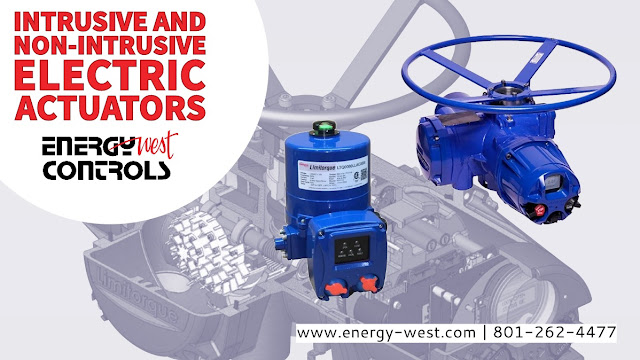
"Intrusive" and "Non-Intrusive" Industrial Electric Actuators
Capitalizing on Hidden Assets: The Significant Energy Potential in Waste Heat with Armstrong International Circular Thermal℠
Types of Industrial and Commercial Check Valves
Silent Check Valves:
Spring Loaded Check Valves:
Poppet Check Valves:
Inline Check Valves:
1955 West Industrial Circle
Salt Lake City, Utah 84104
Phone: 801-262-4477
Fax: 801-261-0862
Web: https://energy-west.com
Process Slurry Knife Gate Control Valves
Applications for process slurry knife-gate control valves are slurry or highly abrasive and viscous fluids in various industries. The valve features a sharp, flat gate that efficiently cuts through the solid particles and sludge in the slurry, thus ensuring effective isolation and control of the flow. This valve is highly durable, reliable, and designed to withstand harsh conditions and frequent wear and tear.
Examples of industries that require process slurry knife-gate control valves are mining, wastewater treatment, pulp and paper, power generation, and chemical processing, where there is a need to handle abrasive and corrosive slurries. These valves install on pipelines to regulate or halt slurry flow and other challenging fluids, preventing leakage and ensuring a safe, efficient, and reliable operation.
The Process Slurry Knife Gate Control Valve outperforms other types of valves for slurry applications due to several key factors:
- Robust and Durable Design: The knife gate valve uses wear-resistant materials like stainless steel to withstand erosive and corrosive slurries. This results in a longer service life and reduced maintenance costs compared to other valves.
- Efficient Flow Control: The sharp-edged, flat gate effectively slices through the slurry, providing a tight seal when closed, preventing leakage, and ensuring accurate flow control, essential for the efficient operation of various industrial processes.
- Minimal Pressure Drop: Unlike other valves, the Process Slurry Knife Gate Control Valve has a full-bore design, which minimizes the pressure drop across the valve, leading to higher energy efficiency and lower operating costs in the long run.
- Self-Cleaning Mechanism: The shearing action of the gate against the valve seat helps to dislodge and remove any debris or solid particles trapped within the valve. This self-cleaning mechanism reduces the chances of blockages and ensures a consistent slurry flow through the system.
- Versatility: The process slurry knife-gate control valve can be customized to handle a wide range of pressures, temperatures, and slurry compositions, making it suitable for various industrial applications.
Slurry knife-gate control valves offer superior performance and durability compared to other valves in slurry applications. Its unique design features make it the ideal choice for industries that deal with abrasive and viscous fluids, ensuring a safe, efficient, and reliable operation.
Slurry Flo Valve Corporation is a company that specializes in designing and manufacturing high-quality control valves for handling abrasive and viscous fluids, such as slurry.
Slurry Flo's innovative patented trim design functions as a variable orifice, focusing the flow within the pipe. This design safeguards the valve body, which contains the pressure, and maintains the integrity of the downstream piping. Slurry Flo valves offer exceptional durability, surpassing the performance of any other valve you've previously utilized. Slurry Flo Corporation is committed to providing tailored solutions and unparalleled customer service to meet the unique needs of its clients.
Energy West, Inc.
1955 West Industrial Circle
Salt Lake City, Utah 84104
Phone: 801-262-4477
Fax: 801-261-0862
Web: https://energy-west.com
The Role of Boiler Drum Level Instrumentation and Controls
Boiler drum level instrumentation and controls play a crucial role in the power generation and process control industries, ensuring steam-generating boilers' safe and efficient operation. These instruments and controls primarily manage the water level within the boiler drum, maintaining it within a specific range to ensure the boiler operates effectively and safely. Their critical functions break down as follows:
- Safety: A boiler's primary objective is to produce steam, which requires a precise water and heat balance. If the water level in the boiler drum is too low, the boiler tubes could overheat and cause a failure or even a catastrophic explosion. Conversely, suppose the water level is too high. In that case, excessive water may be carried over into the steam system, causing damage to downstream equipment and reducing the overall efficiency of the power generation process.
- Efficiency: Maintaining the optimal water level in the boiler drum ensures efficient heat transfer, which directly affects the overall efficiency of the power generation process. The steam produced in the boiler drives turbines and other equipment, so maximizing its efficiency is essential for minimizing fuel consumption and reducing emissions.
- Monitoring and control: Boiler drum level instrumentation and controls continuously monitor the water level, allowing for real-time adjustments. They typically include level sensors (such as float switches, conductivity probes, or radar transmitters), which send signals to a control system. This control system can be a dedicated controller, a distributed control system (DCS), or a programmable logic controller (PLC), which processes the signals and adjusts the feedwater flow into the boiler drum to maintain the desired water level.
- Alarm and trip functions: The instrumentation and controls also provide alarm and trip functions to notify operators of abnormal conditions or to shut down the boiler if necessary. These safety features protect personnel, equipment, and the environment from potential damage caused by boiler malfunctions or failures.
- Regulatory compliance: Boiler drum level instrumentation and controls are subject to stringent regulations and standards in many jurisdictions. Properly functioning instrumentation and controls are necessary for ensuring compliance with these regulations, which aim to protect human life, property, and the environment.
Boiler drum level instrumentation and controls are critical in the power generation and process control industries because they ensure steam-generating boilers' safe, efficient, and compliant operation. By maintaining the optimal water level in the boiler drum, they help to prevent accidents, optimize power generation efficiency, and adhere to regulatory requirements.
Energy West, Inc.
1955 West Industrial Circle
Salt Lake City, Utah 84104
Phone: 801-262-4477
Fax: 801-261-0862
Web: https://energy-west.com
Gasketed Plate Heat Exchangers (GPHEs) and Welded Plate Heat Exchangers (WPHEs)
Gasketed Plate Heat Exchangers (GPHEs) and Welded Plate Heat Exchangers (WPHEs) are types of plate heat exchangers widely used across various industries for their efficiency and versatility. Their primary function is to transfer heat between two fluids without allowing the fluids to mix.
Gasketed Plate Heat Exchangers (GPHEs): GPHEs consist of thin, corrugated metal plates with gaskets around the edges. The plates are arranged in a stacked configuration and held together by a frame. The gaskets seal the plates, preventing fluid leakage and directing the flow of the fluids between alternate plates. The corrugated pattern of the plates increases the surface area and enhances the turbulence, thereby improving heat transfer efficiency. GPHEs disassemble easily for cleaning, maintenance, or expansion.
Welded Plate Heat Exchangers (WPHEs): WPHEs are similar in design to GPHEs, but instead of using gaskets, the plates are welded together, eliminating the need for gaskets and the associated maintenance issues. WPHEs are typically more compact than GPHEs, as they can be built with thinner plates and smaller gaps between them.
There are many industrial and commercial applications for GPHEs and WPHEs however, the two have some performance differences, which can impact their suitability for various applications.
GPHEs:
- Efficiency: GPHEs offer high thermal efficiency and are suitable for applications with moderate temperature and pressure requirements.
- Maintenance: GPHEs have gasket seals that require periodic maintenance and replacement, making them less suitable for applications with aggressive media or high temperatures.
- Flexibility: GPHEs can be easily expanded or reconfigured by adding or removing plates, allowing adaptability to change process conditions.
- Cost: Initial costs for GPHEs are typically lower, but maintenance and downtime costs can be higher due to the need for gasket replacement.
WPHEs:
- Efficiency: WPHEs provide excellent thermal efficiency and are designed for high-pressure and high-temperature applications, making them suitable for harsh operating conditions.
- Maintenance: WPHEs have welded plate connections, which eliminate the need for gaskets, resulting in lower maintenance requirements and longer service life.
- Flexibility: WPHEs have a fixed plate configuration, meaning they cannot be easily expanded or reconfigured like GPHEs. However, their robust design allows higher operating limits and a more compact footprint.
- Cost: Initial costs for WPHEs are typically higher, but they offer lower maintenance and downtime costs due to their welded construction and elimination of gaskets.
For more information, contact:
Energy West, Inc.
1955 West Industrial Circle
Salt Lake City, Utah 84104
Phone: 801-262-4477
Fax: 801-261-0862
Web: https://energy-west.com
The Importance of Managing Waste Heat in Steam and Hot Water Systems
Steam production and hot water systems are crucial in industrial and commercial heating and cooling systems.
Valve Automation
For more information, contact:
Energy West, Inc.
1955 West Industrial Circle
Salt Lake City, Utah 84104
Phone: 801-262-4477
Fax: 801-261-0862
Web: https://energy-west.com
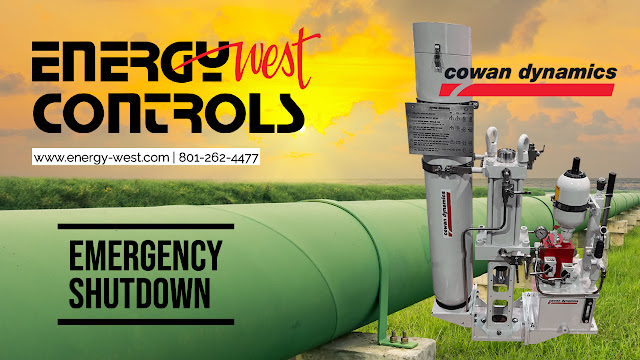
Zero Emission, Emergency Shutdown Valve Actuators
Operators face problems and challenges with API emergency shutdown valves in remote locations where conventional energy sources are unavailable for automation. It is critical for the pipeline's safe operation that such valves can shut down the line when anomalies in the pressure of the gas passing through the pipe occur.
Valves usually are left open. If the line pressure drops or spikes, the system would use stored pressurized hydraulic fluid to close the valve as an emergency shutdown. These old antiquated systems presented several issues that made these highly critical valves inefficient. The main problem was that the system would not hold the valves open for more than two to three days due to internal leakage of the hydraulic system. These actuators would start to drift and prematurely close the valve, requiring the operators to physically go to these remote locations every two days to recharge the system and fully open the valve again. These valves mustn't suddenly close during regular operation and disrupt the flow throughout these midstream pipeline distribution networks.
Cowan Dynamics worked with an operator to review the requirements and recommend a superior design.
Here is a list of the challenges.
- This application presents a lack of conventional energy sources due to these valves' remote location.
- High torque and high thrust requirements make other power sources, such as solar power, unviable.
- The agricultural setting mandated a zero fugitive emissive solution.
- The operators required a drop-in retrofit, adding an extra layer of complexity to the challenge as these valves were underground and not readily accessible.
Cowan developed a solution named the ZE-ESD module. The solution consisted of a hydraulic accumulator, a 3000 psi rated actuator from Cowan's series MLA specially designed hydraulic manifold complete with a reservoir, a leakage compensating small accumulator, and a hand pump that serves as a power source to pressurize the accumulator and actuate the valve. The hydraulic circuit design significantly reduces pressure drops in the system due to thermal expansion or leakage throughout hydraulic components.
Cowan's ZE-ESD system proved a great success. The unique design of the hydraulic circuit far exceeded the original seven-day target. After 12 days of testing, the system only experienced a drop in the main pressure of three percent. After a month of installing the system, the customer advised that the valve needed recharging just once.
Another issue is environmental compliance. Environmental agencies establish stringent emission standards, often imposing heavy fines on those in violation. A large part of these fugitive emissions stems from gas-powered actuators' exhaust. As a result of these economic and environmental implications, Cowan Dynamics and Energy West Controls are committed to helping operators tighten their grip on fugitive emissions. Engineered to comply with API and ISO standards, Cowan's industry-leading range of zero-emission hydraulic modules for quarter-turn and linear valves are certified for maximum compliance with minimum environmental impact.
For more information, contact:
Energy West, Inc.
1955 West Industrial Circle
Salt Lake City, Utah 84104
Phone: 801-262-4477
Fax: 801-261-0862
Web: https://energy-west.com
Detailed Instructions for Setting Position Limits on the Limitorque L120 Electric Actuator
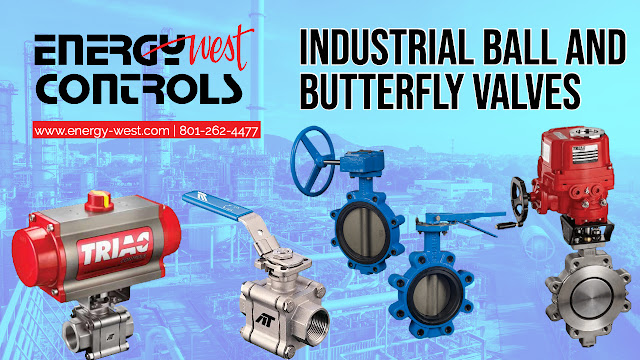
Industrial Ball and Butterfly Valves
A-T Controls Full Product Line Includes:
- High Performance Butterfly Valves
- Resilient Seated Butterfly Valves
- Trunnion Mounted Ball Valves
- Pig Valve Dual Valve
- Isolation Valve Assemblies
- Cryogenic Ball Valves
- Lined Ball Valves
- Tank Bottom Valves
- Electric Actuators
- Spring Return Electric Actuators
- Fail Safe Electric Actuators
- Heavy Duty Actuators
- Pneumatic Scotch Yoke Actuators
- Pneumatic Rack & Pinion Actuators
- 180º Pneumatic Actuators
- Stainless Steel Pneumatic Actuators
- Declutchable Gear Operators
- Gear Operators
- Limit Switches
- Solenoids
- Positioners
Dependable and Accurate Flow Measurement with Armstrong VERIS Verabar®
VERIS Verabar® Benefits
- Superior Signal Stability and Greater Resistance to Clogging
- Long-Term Accuracy You Can Trust
- Data to Back Up Accuracy Claims
- Quality Assurance